
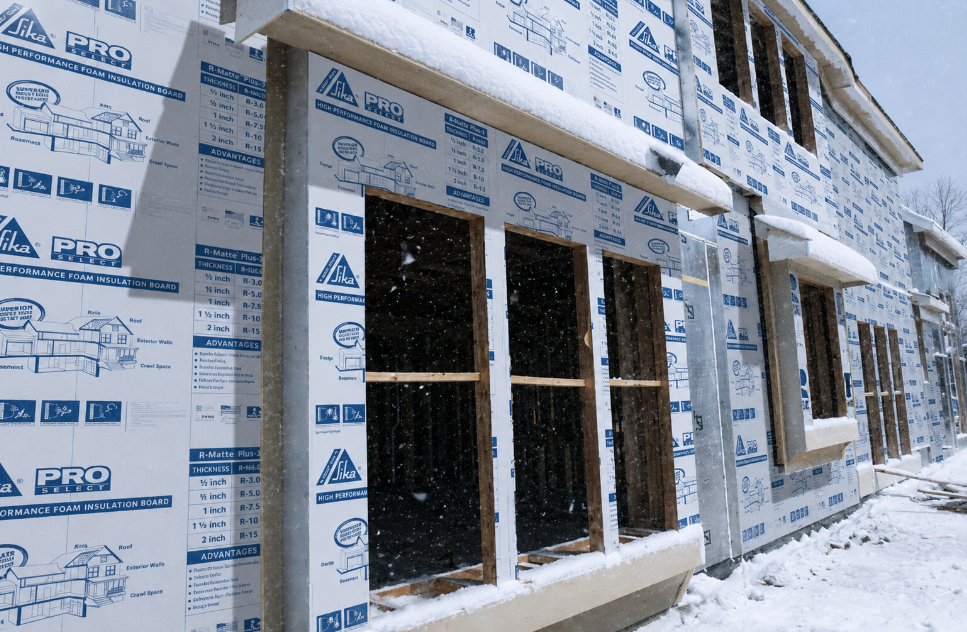
Polyiso can work well in cold climates, but real performance depends on exposure conditions, exterior placement, and how the full wall or roof assembly controls heat flow and moisture. Published R-values still matter, but they do not tell the full winter story once the board is installed in a real wall or roof. For that reason, polyiso insulation cold climate questions are better judged at the assembly level than by a single per-inch number.
Why Cold-Climate Polyiso Performance Is Not a One-Number Question
The main challenge with polyiso insulation cold climate design is that published R-values and winter-installed conditions are not the same thing.
Published Ratings and Winter Conditions Serve Different Purposes
Polyiso is widely used because it offers high nominal R-value per inch, which can help projects reach thermal targets without adding as much thickness as some alternatives. Standard test methods measure thermal resistance under fixed mean temperatures, while real buildings move through seasonal swings and daily cycling. In cold-weather design, that gap matters.
Published thermal ratings are useful for comparing products under controlled conditions. They are much less useful when treated as a complete description of winter enclosure behavior, because cold exposure, assembly location, and adjacent materials all affect the temperatures the board actually sees after installation. Much of the confusion around cold-climate polyiso starts there.
Lower temperatures also make material differences easier to see, which is why polyiso gets extra attention in cold-weather discussions. XPS is commonly positioned as more stable across prolonged cold exposure, while polyiso is more sensitive to where it is installed and what conditions surround it. That does not mean polyiso should be ruled out in cold regions. It means placement and exposure deserve a closer look.
Why Exterior Continuous Insulation Still Matters in Cold Climates
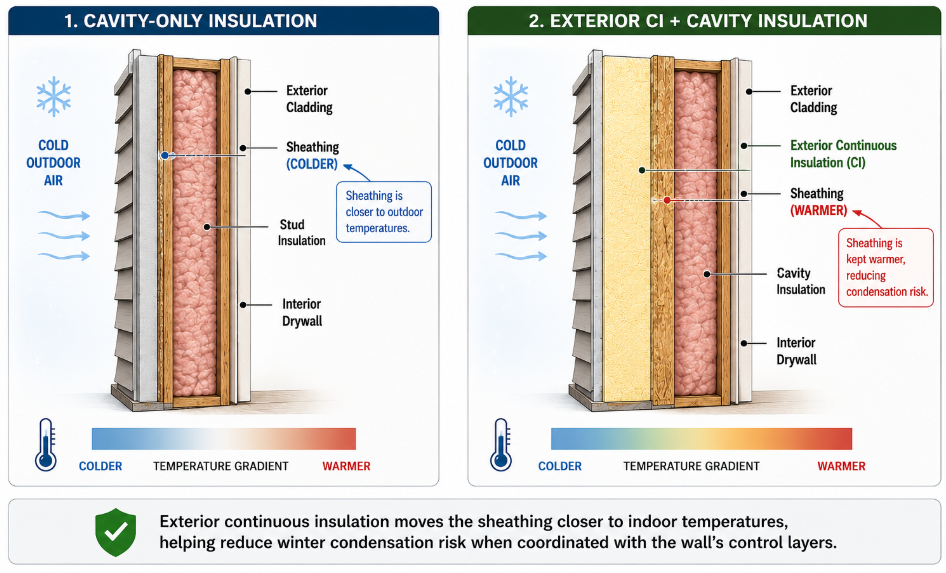
Exterior continuous insulation changes how polyiso insulation cold climate performance should be judged in a real wall or roof.
Thermal Bridging Is a Larger Assembly Issue
When continuous insulation is installed outside the framing, it keeps one exterior thermal layer intact across the structure and cuts down the faster heat-flow paths created by studs, plates, and rim conditions. The wall is more likely to perform the way it was designed to perform, especially when the exterior insulation stays continuous. That is also why these decisions need to be judged at the wall or roof level rather than by cavity values alone.
A cavity-insulated wall does not perform like a uniform insulated panel because framing interrupts the insulation field. Exterior continuous insulation reduces the impact of those interruptions across large surfaces. That matters even more over steel framing, where faster heat flow through the structure makes an unbroken exterior insulation layer far more valuable.
Warmer Sheathing Supports Moisture Control
Exterior insulation can shift condensing-surface potential outward by keeping structural sheathing warmer during cold weather. When that layer is coordinated with the air barrier, WRB, and flashing details, the assembly becomes less vulnerable to winter condensation at the sheathing plane. In above-grade assemblies, that is one of the strongest arguments for keeping polyiso in the discussion.
How Lower Temperatures Affect Installed Performance
Cold-weather exposure matters most when the board is evaluated in the conditions it will actually see after installation.
As temperatures fall below freezing, measured resistance can decline, which makes exposure profile an important part of cold-weather evaluation. At lower temperatures, reduced blowing-agent effectiveness can lower measured resistance under uniformly cold exposure. The real distinction is whether the board is sitting in sustained uniform cold or in a more moderated above-grade assembly shaped by interior heat, adjacent air layers, and exterior finishes. In other words, polyiso cold weather performance turns into a detailing and placement issue once the board is part of a real wall or roof.
Best Practices for Using Polyiso in Cold-Climate Assemblies
The most reliable polyiso insulation cold climate strategy is a coordinated enclosure approach rather than a simple “more insulation” rule.
In cold-climate above-grade work, polyiso performs more predictably when the design team treats it as part of the full wall or roof section instead of reducing the decision to a board rating alone. Exterior placement, continuity, and clean transitions all affect how the insulation performs after installation. Moisture control, air control, and drainage have to work with that thermal layer rather than around it.
Key detailing priorities include:
placing polyiso outside the framing to reduce heat loss through studs and plates
keeping the insulation plane continuous across joints, openings, and transitions
using thickness and layering to support warmer sheathing and more consistent thermal continuity inside the assembly
coordinating the insulation with flashing, drainage details, the WRB, and the primary air barrier
checking that the full assembly aligns with the project’s code path rather than relying on board value alone
Handled that way, polyiso insulation performance stays tied to the wall or roof section it is supporting instead of being reduced to a board number on paper.
Cold-Climate Recommendations by Climate Zone
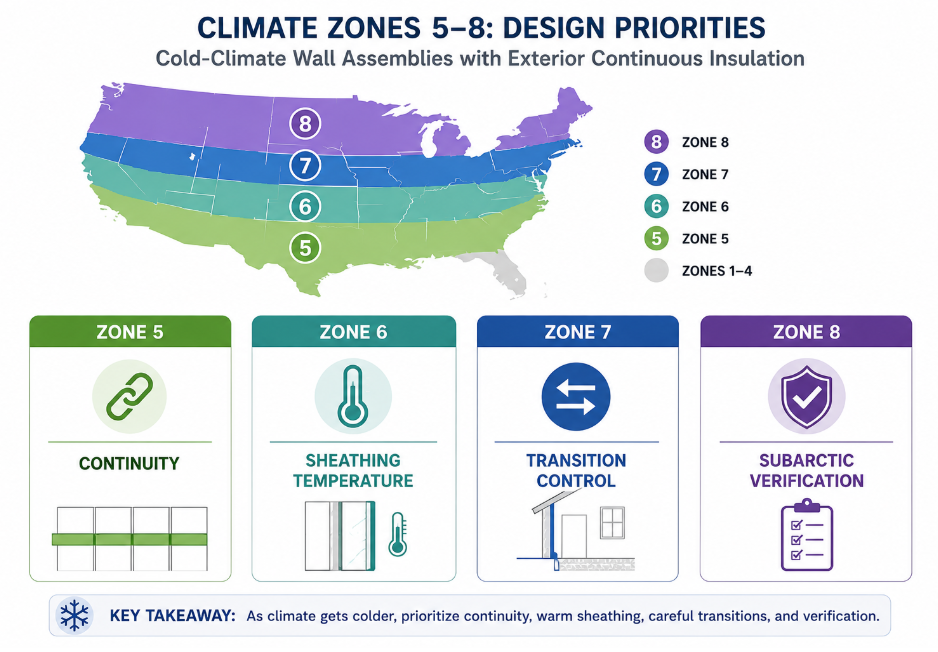
Across colder climate zones, a sound polyiso insulation cold climate strategy shifts from basic continuity and condensation control toward tighter transition review and higher insulation levels.
Zones 5 and 6
In Zones 5 and 6, the main job is to keep the exterior insulation layer continuous enough to limit framing losses and hold the sheathing temperature in a safer range during winter. These assemblies can still use mixed approaches, including continuous insulation paired with cavity insulation, but the layer coordination needs to stay disciplined.
Zones 7 and 8
In Zones 7 and 8, the detailing burden gets heavier because cold exposure lasts longer and insulation level becomes more critical. Zone 8 falls into the subarctic category, so these assemblies warrant closer review of transitions, continuity, and code alignment before the wall or roof section is finalized.
| Climate Zone | Primary Cold-Climate Concern | Polyiso Planning Priority |
|---|---|---|
| Zone 5 | Thermal bridging and winter condensation risk | Maintain exterior continuity and coordinate CI with the air and water control layers |
| Zone 6 | Greater heat loss and colder condensing surfaces | Increase attention to CI thickness, transitions, and moisture-control strategy |
| Zone 7 | More severe winter exposure | Reduce interruptions in the insulation plane and review assembly performance carefully |
| Zone 8 | Subarctic conditions | Prioritize continuity, higher insulation levels, and closer code review and assembly coordination |
This zone summary is a planning aid, not a substitute for project-specific code review.
Once the climate and wall demands are clear, the material choice gets more straightforward.
How Polyiso Compares With XPS in Cold Conditions
In cold weather, polyiso insulation cold climate selection is best judged by exposure, thickness limits, and the above-grade assembly being built. XPS is typically positioned as more stable across prolonged cold and moisture-heavy exposure, while polyiso commonly offers a higher nominal R-value per inch and can help reach target thermal values with less thickness. The comparison is most useful when it stays tied to real assembly conditions rather than broad material claims.
| Insulation Type | Standard Thermal Position | Cold-Weather Note | Common Assembly Fit |
|---|---|---|---|
| Polyiso | Higher nominal R-value per inch, often around R-6 | Measured resistance can decline below freezing, so placement and exposure conditions matter | Common in exterior walls and roofs, where thinner profiles, facer compatibility, and thermal continuity matter |
| XPS | Typically rated near R-5 per inch | Maintains relatively stable resistance across a wide temperature range, including prolonged cold | Often selected where moisture exposure or cold performance is the main driver |
For a cold-climate wall or roof, the comparison is most useful when it helps narrow the right material for the exposure, thickness, and detailing demands already on the project. That also gives polyiso performance in cold weather the right context.
Choose Rmax Continuous Insulation for Better Enclosure Control
Rmax insulation systems support exterior thermal continuity, climate-responsive assembly design, and more controlled enclosure performance across demanding wall and roof applications. Careful detailing, verified assembly design, and the right insulation strategy all matter in colder regions. Contact us today for more information.
FAQ About Polyiso in Cold Climates
-
Polyiso can show lower measured resistance as temperatures fall, which is why cold-weather performance should be evaluated in the actual wall or roof assembly instead of by nominal board value alone.
-
At lower temperatures, reduced blowing-agent effectiveness can lower measured resistance under sustained cold exposure.
-
Yes, especially in above-grade wall and roof assemblies where exterior continuous insulation helps control thermal bridging and keep structural layers warmer.
-
In many above-grade assemblies, polyiso works best outside the framing as continuous insulation so the thermal layer stays more continuous across studs, plates, and other transitions.
-
The better comparison is based on exposure, thickness limits, moisture conditions, and the full wall or roof section rather than on nominal R-value alone.