
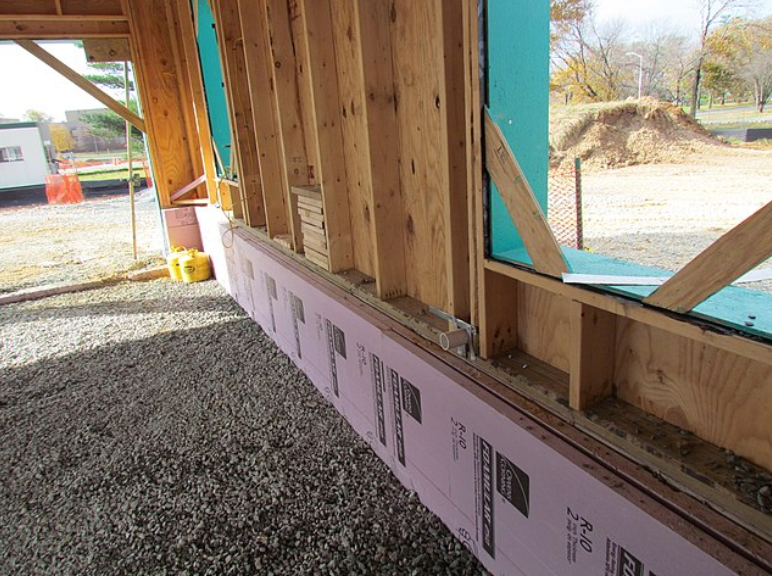
Framed walls lose thermal performance in common transition points. Studs, plates, and rim conditions interrupt cavity insulation and create faster heat flow paths through wood members, and those losses accumulate across an elevation as higher heating and cooling demand. Polyiso continuous insulation addresses that weak point by keeping one exterior thermal layer intact across the structure.
Why Exterior Thermal Continuity Changes Wall Performance
Exterior insulation affects how heat moves through the entire wall, not just the insulated cavities, which changes how consistently the wall performs across seasons.
How Polyiso Continuous Insulation Works In Wall And Roof Systems
Polyiso continuous insulation is often specified on exterior walls and roofs because it combines high thermal resistance with interface compatibility that supports common enclosure layer stacks. The foam core provides low thermal conductivity, while facers contribute dimensional stability and help the board integrate cleanly with adjacent layers. On a real job, the insulation layer gets fastened and penetrated, then it has to stay flat behind cladding. That field reality shapes what performs well.
Thermal Bridging And Effective R-Value In Framed Walls
R-value discussions can obscure the larger issue in framed construction, which is how heat bypasses insulated cavities through repetitive framing members. Exterior insulation changes the dominant heat flow path by reducing the impact of studs and plates across the wall area. Polyiso continuous insulation supports that outcome by keeping thermal resistance consistent across large surfaces, so whole-wall performance tracks closer to modeled expectations when continuity is maintained. Fewer interruptions matter. Often more than small differences on a datasheet.
Temperature Effects Under Real Jobsite Conditions
Temperature conditions still influence insulation behavior, and polyiso is no exception. Standard test methods measure thermal resistance under fixed mean temperatures, while real buildings operate through seasonal swings and daily cycling.
In many exterior wall conditions, the insulation layer is moderated by interior temperatures and adjacent materials, which limits extreme temperatures within the board itself. Placement, thickness, and sequencing determine the temperature profile the insulation experiences, and that profile governs how it performs on the wall.
Residential Framing Conditions Wood And Steel
In residential construction, exterior insulation is commonly added over wood studs or light-gauge steel framing, and the framing type changes how heat moves through the wall. Steel conducts heat faster than wood, so maintaining an unbroken exterior insulation layer becomes even more important when steel studs are in the load-bearing wall.
Fire performance has to be handled through the wall’s full code-compliant build-up, including the interior finish and any required thermal barrier or ignition barrier, because acceptance depends on the adopted code and the specific wall configuration.
Moisture Control In Exterior Wall Systems
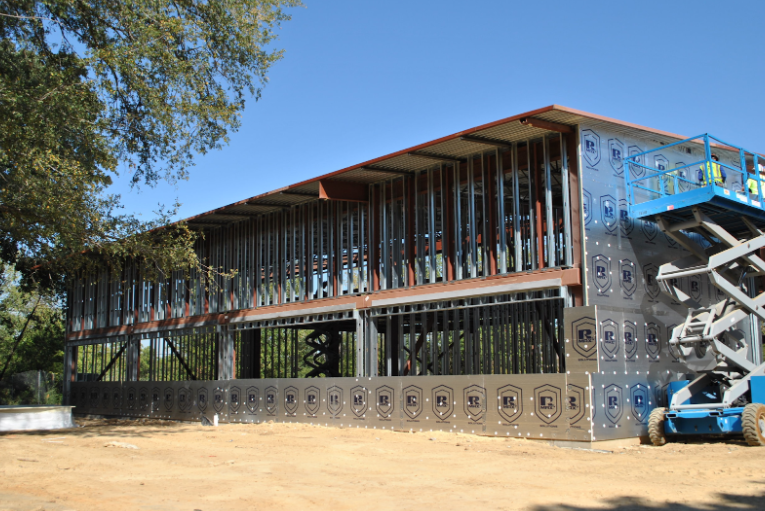
Moisture behavior depends on temperature, air movement, and water management working together rather than on any single layer acting alone.
Moisture Control And Condensation Risk Behind Sheathing
Exterior insulation shifts condensing surface potential outward by keeping structural sheathing warmer during cold weather, which reduces the likelihood of wintertime condensation at that layer. Polyiso continuous insulation contributes to this effect when it is coordinated with the air barrier and the WRB so the wall stays tighter under pressure. Warmth helps. Detailing does the rest.
How Air Leakage And Water Intrusion Drive Moisture Problems
Bulk water intrusion usually traces back to rain management failures at penetrations, openings, and flashing interfaces. Air leakage can transport large amounts of water vapor into colder cavities when pressure differences drive interior air outward, while diffusion tends to play a smaller role under typical conditions.
Exterior insulation improves moisture control most reliably when the wall sheds water outward through a clear flashing and drainage plane and holds air movement at the primary air barrier. Moisture performance depends on keeping bulk water out, limiting air leakage, and maintaining a shingled WRB with continuous flashing that drains to daylight.
Structural Coordination With Exterior Insulation
Once insulation moves outside the framing, the wall has to manage loads and movement differently, which places more importance on how layers connect back to structure.
Fastening, Cladding Support, And Load Transfer Through Exterior Insulation
Added thickness changes cladding load paths because fasteners and brackets must bridge the insulation layer back to structure. Polyiso continuous insulation is commonly paired with attachment strategies that maintain cladding support while limiting compression and managing thermal penalties at fasteners. The goal is straightforward: protect continuity without compromising structure.
Wall Bracing And Shear Coordination
Wall bracing and shear resistance are handled in the structural plane of the wall through sheathing, engineered bracing panels, or other code-approved methods designed to resist lateral loads. Exterior insulation sits outside that structural plane, so it must be detailed to avoid interrupting the bracing strategy or the load transfer path back into the framing. In this wall build-up, insulation focuses on thermal and environmental control while structural resistance is handled by the selected framing and sheathing strategy.
Code Compliance And Field Execution
Code alignment and real-world detailing determine whether exterior insulation delivers its intended performance once the building is occupied.
Energy Code Alignment And Compliance Pathways
Energy codes reward walls that reduce thermal bridging and improve whole-wall performance. Many jurisdictions expect exterior insulation as part of prescriptive compliance for common wall types, and performance paths benefit when models reflect reduced heat loss at framing members. Current continuous insulation code requirements define how insulation placement and continuity are evaluated under common energy-code approaches.
Execution Quality At Floors, Parapets, And Openings
The insulation layer must remain continuous by definition, and small gaps at transitions can add up quickly around floors, parapets, and openings. Interruptions create cold spots that reduce comfort and raise condensation risk. Walls perform more predictably when transitions are detailed so the insulation plane stays aligned with the air barrier, the WRB, and the flashing and drainage plane across repeat conditions.
Roof Build-Ups Using Exterior Polyiso
Roof conditions follow the same physical principles even though geometry and exposure differ. Placing insulation above the roof deck reduces thermal bridging through framing or deck elements and stabilizes interior temperatures below. In low-slope systems, polyiso commonly sits above the deck and below the membrane, creating a continuous thermal layer and a compatible substrate for many roofing assemblies. Roof continuity also moderates surface temperatures and limits localized heat loss at structural elements.
Long-Term Performance And Energy Impact
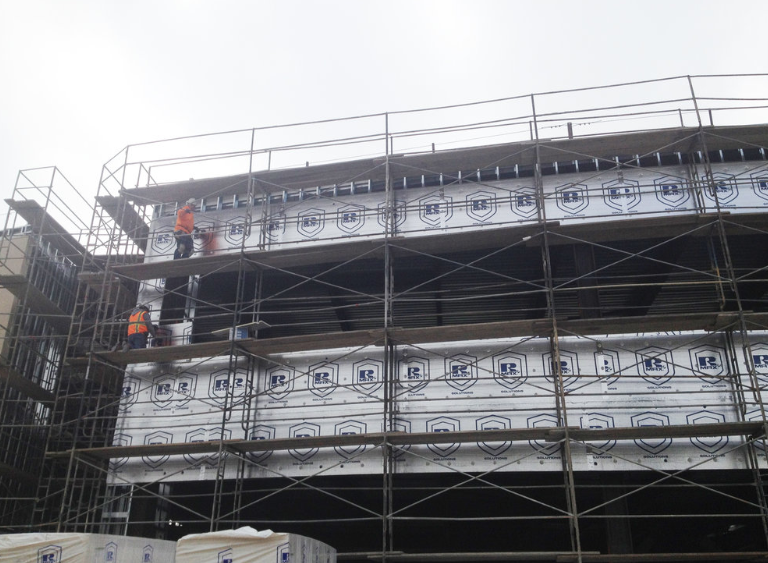
Durability and operating efficiency determine whether exterior insulation continues to deliver value long after construction is complete.
Durability And Long-Term Stability
Deformation under load, movement over time, or repeated wetting can compromise enclosure performance. Polyiso boards are selected and detailed to remain stable when protected within a properly coordinated wall or roof layer stack, with facer selection aligned to interfaces and exposure conditions. Durability still comes back to fundamentals: water shedding, air control continuity, and clean sequencing at flashing details.
Operational Energy And System-Level Value
Reducing heating and cooling demand lowers operational energy use over decades of service. Exterior insulation can also allow thinner wall profiles to meet targets, influencing material use across the enclosure. The broader enclosure impact of continuous insulation is typically evaluated through reduced thermal bridging and more stable wall behavior rather than a single material attribute.
System Integration As The Performance Driver
Exterior insulation works when the insulation plane remains intact and the air barrier stays continuous, the WRB stays shingled and sealed, and the flashing and drainage plane stays uninterrupted through openings and transitions. Polyiso continuous insulation fits that strategy when attachment loads, transition detailing, and layer compatibility are addressed deliberately. Fewer thermal weak points. Lower condensation risk. Clearer compliance paths.
Specify Rmax Polyiso Insulation Boards For Reliable Wall And Roof Performance
Rmax manufactures rigid polyiso insulation boards used in exterior wall and roof conditions where thickness control, facer compatibility, and predictable enclosure performance matter. Multiple product and facer options support common attachment methods, membranes, and cladding systems. Contact us today for more information.