
Every home faces moisture challenges—some visible, most hidden—that can turn into decay over time. Warm indoor air carries vapor that condenses on cooler surfaces within wall cavities, feeding microscopic growth that spreads through paper facings and framing. A truly mold free home starts with assemblies that control air movement, surface temperature, and humidity before spores ever find a foothold.
What Makes a Mold Free Home
Mold develops when three conditions align—moisture, moderate temperature, and an organic food source. Modern homes often meet two of those automatically:
Wood framing
Drywall paper
Dust supply nutrients
While conditioned interiors maintain ideal temperatures for growth
The only controllable factor is moisture. Limiting water vapor and liquid intrusion turns a vulnerable structure into a stable one.
Preventing mold requires maintaining materials below their critical moisture content. That balance depends on insulation continuity, air sealing, and vapor management, all of which determine where condensation forms and how quickly it dries. If a wall can’t release trapped moisture, even a small air leak can start a chain reaction leading to structural and indoor-air problems.
How Moisture Enters Wall Assemblies
Moisture enters a wall assembly in more ways than most builders realize. Understanding these pathways helps identify where control layers must stop leaks, block vapor movement, and protect structural materials from long-term damage.
Bulk Water Leaks
Bulk leaks stem from poor flashing or failed sealants that allow rain to bypass exterior defenses. Once inside, liquid water can saturate framing or sheathing, feeding long-term decay.
Capillary Action
Capillary wicking draws water into cracks or porous materials such as untreated sheathing. Even tiny voids can pull moisture upward through surface tension, carrying it well above the original leak.
Vapor Diffusion
Vapor diffusion carries moisture through materials when humidity differences exist on either side. The rate depends on each layer’s permeance and temperature gradient—key factors when selecting insulation and finishes.
Air Transport
Air transport, the fastest and most damaging route, drives humid indoor air through openings around outlets, framing joints, and penetrations. These leaks move large moisture volumes that condense on cooler surfaces.
Condensation and Dew Point
Once moisture gets inside, it settles on the first cold surface it finds, right at the dew point. Over time, those damp layers sustain mold even when interior finishes look dry. Stopping airflow at the sheathing plane and controlling vapor movement through proper insulation design are the foundation of any mold-resistant wall.
Selecting Mold Resistant Building Materials
Choosing the right materials determines whether moisture becomes a temporary visitor or a permanent resident. Mold feeds on cellulose and adhesives commonly found in wood products and paper-faced boards. Using mold resistant materials interrupts that food chain.
Framing: Treated lumber or steel studs resist biological decay.
Sheathing: Fiberglass-mat gypsum and cement boards offer low nutrient content and moisture stability.
Finishes: Acrylic or mineral coatings reduce surface absorption compared to latex paints.
Insulation: Closed-cell foams like polyiso provide both thermal control and vapor resistance.
When specifying assemblies, verify that each layer complements the next. A wall combining vapor-tight insulation with vapor-open sheathing can dry outward while still blocking inward diffusion—ideal for humid regions. Ask directly, what material is mold resistant, and request test data such as ASTM G21 (polymeric materials) or ASTM D6329 (indoor materials). (ASTM D3273 applies only to interior coatings.)
Alternative Wall Systems
Some builders achieve similar moisture control using insulated concrete form (ICF) walls, which integrate structure and insulation into a single system. While ICF assemblies offer strong resistance to moisture and mold, framed or masonry walls detailed with Rmax polyiso insulation provide equivalent protection by maintaining continuous thermal and vapor barriers across the envelope.
Insulation’s Role in a Mold Free Home
Temperature drives condensation, so the insulation layer controls much more than comfort. Continuous exterior insulation keeps sheathing above the dew point, preventing moisture from forming inside the wall.
Thermal and Vapor Performance
Polyisocyanurate (polyiso) insulation achieves high R-value per inch—typically R-5.6 to R-6.5 per inch—while maintaining low vapor permeability, usually below 1 perm at 1-inch thickness and as low as 0.03 perm for foil-faced products. Those values limit vapor transmission through the assembly and keep structural layers dry.
Moisture Resistance and Detailing
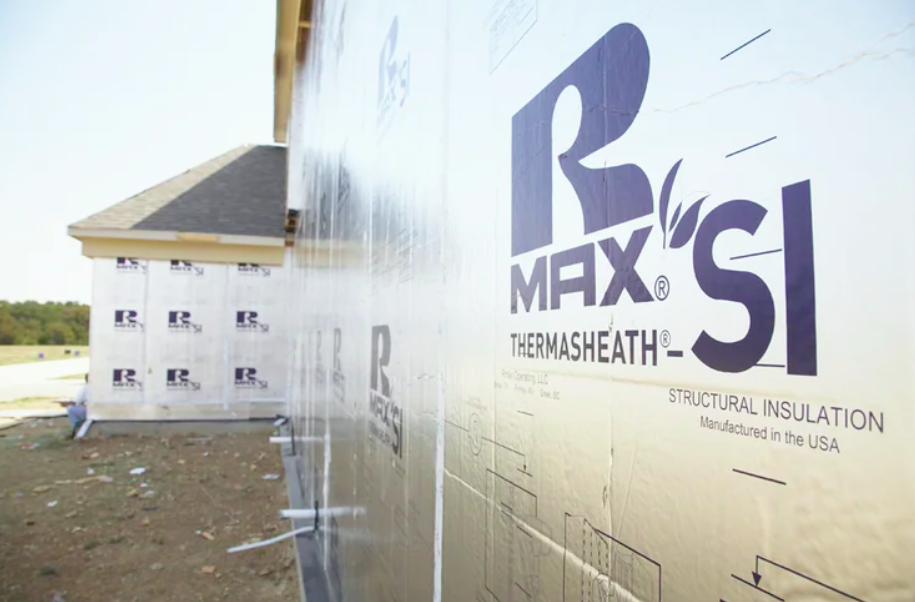
Foil-faced Rmax polyiso boards combine thermal efficiency with built-in moisture resistance. Their closed-cell structure has very low water absorption (≤ 0.2–1 % by volume, ASTM C209), and properly sealed joints block humid air from reaching colder layers. Used correctly, they create a stable thermal and vapor boundary that supports healthy indoor conditions.
Integrated System Performance
In a high-performance wall assembly, every layer, air barrier, insulation, cladding, and finish, works together to keep temperatures uniform and prevent condensation from forming at vulnerable interfaces.
Design and Detailing for Long-Term Resistance
Building a mold free home extends beyond material choice. Detailing determines whether theory holds up on the jobsite.
Control Water First: Provide continuous flashing, overhangs, and rainscreens to deflect bulk water.
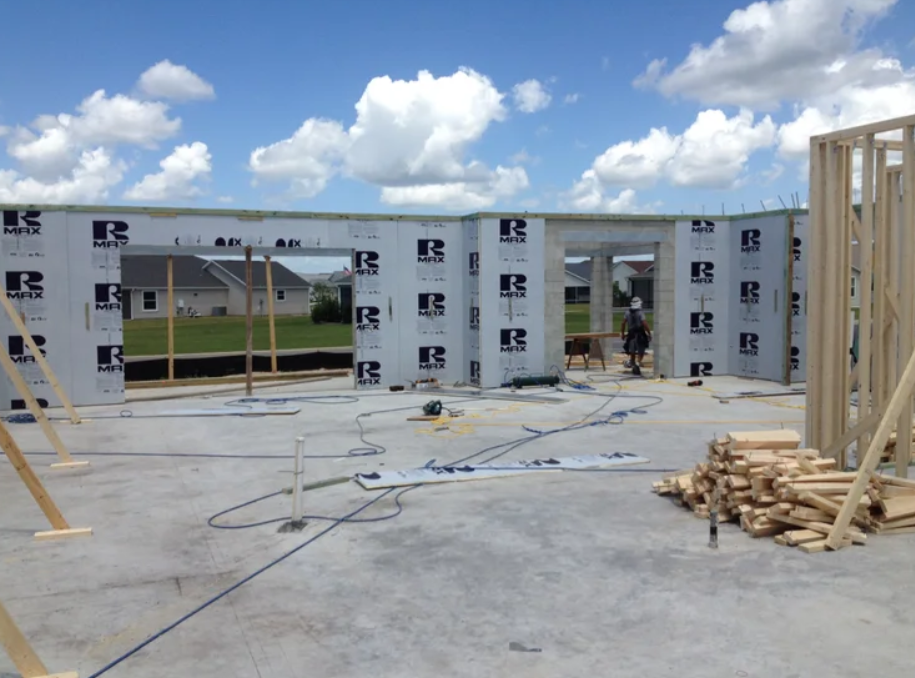
Seal the Air Barrier: Connect membranes and sheathing joints with compatible tapes to maintain continuity around openings.
Manage Vapor Flow: Match insulation type and location to climate zone—foil-faced polyiso outside in cold zones; vapor-retarding layers inside in hot-humid areas.
Ventilate Intentionally: Use balanced mechanical ventilation per ASHRAE 62.2 and control indoor humidity—EPA Indoor airPLUS recommends 40–60 % RH for most of the year, while ASHRAE advises keeping RH below 65 % to limit microbial growth.
Verify Performance: Conduct blower-door and infrared testing before finishes close the wall to catch leaks early.
When all these pieces work together, assemblies stay dry through every season. The result is mold free housing that lasts decades with minimal maintenance.
Integrating HVAC and Ventilation Systems
A building science insulation strategy succeeds only when the mechanical system complements the envelope. Poorly sized HVAC units can short-cycle, leaving indoor air damp and stagnant. Energy-recovery ventilators (ERVs) or heat-recovery ventilators (HRVs) exchange stale indoor air with fresh outdoor air while conserving energy.
Dedicated dehumidifiers help in basements or coastal climates where humidity regularly exceeds 70 %. Together, these components maintain steady airflow and humidity, reducing mold potential while improving occupant comfort.
Regional Design Considerations
Climate determines drying direction and vapor-barrier placement.
Cold climates: Exterior continuous insulation keeps the dew point outside structural framing. Foil-faced polyiso prevents vapor from entering while allowing interior drying.
Hot-humid climates: Place vapor-retarding layers on the interior to stop warm, moist outdoor air from condensing on cool drywall.
Designers should review IECC climate-zone maps to coordinate wall composition and insulation thickness for each region. These small adjustments help achieve the same mold free home outcome whether the project sits in Maine or Florida.
Sustainability and Health Advantages
Moisture-controlled construction supports both environmental and occupant health goals.
Mold-resistant assemblies require fewer repairs, generate less waste, and sustain indoor air quality without chemical treatments.
Polyiso insulation contributes additional efficiency—its high thermal resistance reduces HVAC demand, lowering energy use and carbon footprint.
Because it lasts decades without performance loss, polyiso extends service life and reduces landfill waste from replacements.
Selecting durable, mold resistant building materials ensures long-term performance that aligns with green-building standards while maintaining a clean, healthy interior. These strategies directly support indoor air quality home construction, creating a mold free home that performs efficiently and safely over its entire lifespan.
Protect Indoor Air Quality with Rmax Mold-Resistant Insulation
A healthy home starts with assemblies that stay dry from the inside out. Our polyiso insulation delivers continuous thermal and vapor control to prevent mold and moisture buildup within the wall cavity. Contact us today for more information.