

Every foundation interacts with temperature, moisture, and soil movement. When frost drives deep into the ground, expanding water lifts the structure above, an effect known as frost heave. Frost-protected shallow foundations (FPSF) avoid that risk by using continuous energy efficient insulation around and beneath the slab to stabilize soil temperature and prevent movement.
How Frost Protected Shallow Foundations Work
An FPSF controls freezing by slowing heat loss from the building to the soil. Instead of dropping footings four feet below grade, designers install rigid insulation vertically along the footing and horizontally extending 24–48 inches. These layers hold natural geothermal warmth under the structure, maintaining soil near 32 °F even through extended cold snaps. By reducing excavation, FPSF assemblies save labor, concrete, and trucking time while minimizing soil disruption.
Effectiveness depends on uninterrupted insulation, gaps or saturated boards create cold bridges that let frost penetrate. Correct detailing, backfill compaction, and drainage ensure the system performs for decades rather than seasons.
Why Energy Efficient Insulation Matters in FPSF Design
The effectiveness of a frost-protected shallow foundation depends on how well the insulation manages heat flow between the structure and the soil.
Thermal Control and Stability
High-R, moisture-resistant insulation limits conductive heat loss so sub-grade soils stay warm and stable through freeze–thaw cycles. Energy efficient insulation therefore delivers a dual payoff: lower operating energy for the building and a foundation that stays in place.
Design Variables and Temperature Assumptions
Designers analyze the thermal gradient from slab surface to soil, adjusting insulation thickness until heat loss remains below the freezing threshold. Polyiso’s higher R-value per inch means less material is required to achieve that balance, an advantage where site elevation or step-downs limit wall depth.
FPSF design assumes the structure maintains a consistent interior temperature through winter, typically around 64 °F or higher, so that heat flow from the building stabilizes soil temperature at the footing line. Buildings below that threshold require additional engineering or deeper footing placement.
Codes and Standards Governing Frost Protected Shallow Foundations
The International Residential Code (IRC R403.3) recognizes FPSF as an engineered alternative to conventional deep-footing construction.
ASCE 32-01 Design and Construction of Frost Protected Shallow Foundations defines required insulation values, wing lengths, and configurations by climate zone and indoor temperature.
Designers must also meet IECC Table R402.1.2, which lists minimum slab-edge insulation levels—typically R-10 for Zones 4–5 and R-15 to R-20 in Zones 6–8.
Designers may also use the site’s air-freezing index (AFI)— AFI is a cumulative degree-day metric for below-freezing air; ASCE 32 uses a 100-year design AFI to size insulation and footing depth for reliability.
Following these tables ensures adequate frost protection and long-term efficiency. Documenting these values during design review helps officials confirm compliance and speeds permitting.
Choosing the Right Insulation Material
Selecting the right insulation type determines how well a frost-protected shallow foundation performs over time. Each material offers different strengths in R-value, moisture resistance, and compressive capacity, factors that directly affect durability and long-term thermal control.
Expanded Polystyrene (EPS)
Pros: Inexpensive, widely available, and easy to handle.
Limitations: Open-cell structure absorbs water easily, which reduces R-value once saturated.
Typical R-value: About R-4 per inch.
Extruded Polystyrene (XPS)
Pros: Closed-cell foam with improved moisture resistance and higher compressive strength than EPS.
Limitations: Over time, XPS gradually loses its blowing agent, reducing thermal performance.
Typical R-value: Around R-5 per inch.
Polyisocyanurate (Polyiso)
Pros: Provides R-6 to R-6.5 per inch, delivering more thermal resistance with less thickness. Its closed-cell structure resists water absorption and compression, maintaining strength above 20 psi.
Environmental Advantage: Uses next-generation, low-GWP blowing agents for reduced environmental impact.
Best Fit: For builders seeking durable, energy efficient insulation that performs under load, resists moisture, and supports sustainable design goals.
R-Max Polyiso Performance in FPSF Applications

The performance of any frost-protected shallow foundation depends on insulation that maintains its strength and consistent insulation performance under soil pressure and moisture exposure. R-Max® addresses these challenges with a below-grade polyiso formulation engineered specifically for foundation and slab-edge environments.
Product Function
The R-Max® Below Grade Insulation & Protection Board is designed for foundation and slab-edge conditions. Its closed-cell polyiso core and reinforced polymeric facers withstand soil contact, moisture, and mechanical stress during backfill while maintaining stable thermal performance through seasonal temperature swings.
Performance Metrics
With a compressive strength of 25 to 60 psi, the board supports slab and edge loads without deformation. Its water-absorption rate below 0.3 % (ASTM C272) preserves thermal performance, and available thicknesses deliver roughly R-10 at 1½ inches, providing high insulation value in a thin profile.
FPSF Design Integration
Because polyiso yields more R-value per inch than EPS or XPS, the R-Max Below Grade board helps FPSF assemblies meet prescriptive perimeter and under-slab requirements while minimizing excavation and material cost. That’s what energy efficient insulation does best, deliver lasting frost protection with less bulk and lower embodied energy.
Installation and Moisture Control Considerations
A typical FPSF includes a compacted granular base, a perimeter drain tile, and a vapor barrier or waterproof membrane above horizontal insulation.
Extend vertical boards from footing to finished grade and protect with flashing or cementitious coating to resist UV and insect damage.
Seal joints with compatible foam sealant, maintain positive drainage, and backfill evenly to avoid bending the insulation; at corners, use the project’s corner R-value and width per design tables.
Because heat loss intensifies at corners, tables typically require wider or thicker insulation at corners than along straight runs. Detail it right, and the foundation shrugs off frost and moisture, the two culprits behind early movement.
Regional Adaptations and Energy Savings
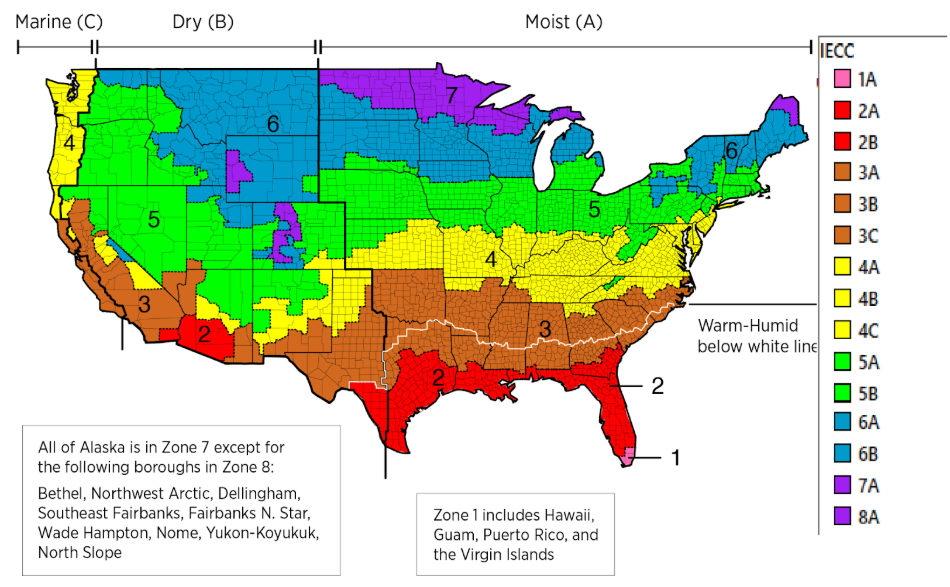
Frost-protected shallow foundation performance depends on local climate and soil temperature. Insulation layout, thickness, and depth must be adjusted to match regional frost levels while still achieving long-term energy efficiency.
Climate-Zone Adjustments
FPSF detailing changes with climate. In IECC Zones 6–8, designs commonly increase horizontal R-value and wing width (often 2–4 ft, with higher R levels in the coldest regions) to resist deeper frost lines. In mixed or marine zones, designers may shorten the horizontal “wing” or use vertical-only insulation and still maintain frost protection.
Performance and Cost Outcomes
Design guides show FPSFs can reduce footing depth to as little as ~16 inches in climates that would otherwise require much deeper excavations, lowering earthwork and concrete volumes. Analyses also show the slab edge can account for roughly 60% of total slab heat loss, so continuous perimeter insulation materially improves performance.
Application Fit and Limitations
Frost-protected shallow foundations perform differently depending on climate, soil stability, and building operation. The parameters below define where the system is most effective, and where deeper or engineered footings are still required.
Where FPSF Work Best
The technique performs reliably in cold and very-cold zones that experience seasonal freezing rather than permafrost. It’s intended for heated structures, where indoor temperatures around 63–64 °F keep soils above freezing near the footing. Ideal uses include slab-on-grade and stem-wall buildings on level or moderately sloped sites. FPSF designs suit energy-efficient homes, light-commercial buildings, and multifamily projects seeking reduced excavation and faster build times. In practical field studies a shallow foam skirt just a few inches thick has been shown to provide equivalent frost protection to roughly four feet of traditional footing depth.
Where FPSF May Be Limited or Require Engineering
In permafrost regions, such as Alaska’s Arctic and interior zones, the soil remains frozen year-round, making FPSF unsuitable. The same applies to unheated or intermittently conditioned structures like detached garages or seasonal cabins. Sites with steep grades, poor drainage, or frost-susceptible clays require added insulation or geotechnical design to prevent heave. If decks, porches, or exterior slabs interrupt the insulated area, the design must restore a continuous thermal boundary to preserve frost protection.
Specify R-Max Polyiso for Code-Compliant Foundation Designs
R-Max manufactures polyiso insulation engineered for demanding foundation conditions. Each board is tested for compressive strength, moisture resistance, and thermal stability under real winter loads. Reach out to our team today for guidance on selecting the best products for your situation.