Fire terminology influences every insulation specification discussion on a project. Teams comparing fireproof insulation to fire-resistant and fire-rated options need precise language for design decisions. Those terms only make sense in the context of how heat, flame, smoke, and the full assembly behave under fire-test standards that define acceptable performance.
Field Performance Requirements for Fireproof Insulation
A fire-focused assembly depends on how each component behaves under ignition, heat, and structural movement, and insulation contributes to that performance through its reaction to flame and elevated temperature. In practical terms, designers look for stable behavior long before any test criteria come into play.
What “Fireproof” Means in Practice
The phrase fireproof insulation appears often in practice, but it is not a recognized code category. In real assemblies, “fireproof” functions as shorthand for materials that do not contribute fuel, resist ignition, and remain stable under elevated temperatures. Insulation alone cannot create a fireproof assembly; the rating comes from how all components, sheathing, cladding, barriers, fasteners, and joints, perform together during fire exposure.
Insulation Behavior Under Fire Exposure
In the field, fireproof insulation is expected to resist ignition long enough for the assembly to maintain its intended structural stability and limit early flame movement. Codes do not certify insulation as “fireproof”; they measure flame spread, smoke development, and structural endurance within standardized tests.
Because assemblies, not individual materials, receive the final fire rating, designers select insulation based on its behavior alongside adjacent materials while retaining stable thermal behavior under heat.
What Fire-Resistant and Fire-Rated Insulation Actually Mean
Fire terminology affects how insulation is selected for assemblies that require specific flame, smoke, and endurance characteristics.
How Fire-Resistant Insulation Is Defined and Measured
Fire-resistant insulation slows ignition and limits flame movement across its surface. Its behavior is measured by how the material reacts under controlled laboratory conditions where flame exposure, heat release, and smoke development are recorded. These characteristics determine how the insulation performs when installed in commercial walls, ceilings, or roofs.
What “Fire-Rated Insulation” Means in System Design
“Fire-rated insulation” is industry shorthand for insulation installed within a fire-rated assembly, since ratings apply to the complete system tested to a recognized fire-resistance standard. Surface burning is typically measured under ASTM E84, which establishes flame-spread index and smoke-developed index. Assembly fire ratings come from tests such as ASTM E119 or UL 263, which assess how the complete wall or roof responds under sustained heat.
Code Tests That Govern Insulation Fire Performance
Fire testing establishes how a complete wall or roof assembly responds under heat and flame, and insulation must meet the requirements defined by the position it occupies within that system.
Assembly-Level Requirements in the Building Codes
Building codes assign fire performance to assemblies rather than individual components. Because insulation occupies cavities, roof decks, or continuous layers along the exterior envelope, its fire behavior must align with requirements for each location. Performance is determined through a combination of surface-burning tests, structural endurance tests, and exterior wall propagation tests.
Key Fire Test Standards for Insulation and Assemblies
In early fire exposure, ASTM E84 determines how quickly flame travels across the material surface and how much smoke develops. Exterior wall systems may require NFPA 285 compliance when combustible components appear in multi-story façade assemblies.
The test confirms whether the wall configuration resists vertical or lateral flame propagation. Designers evaluate and select assemblies with these variables in mind, considering composition, thickness, facer type, and the tightness of the surrounding envelope.
Comparing Material Behavior: Polyiso, Mineral Wool, Fiberglass, and Spray Foam
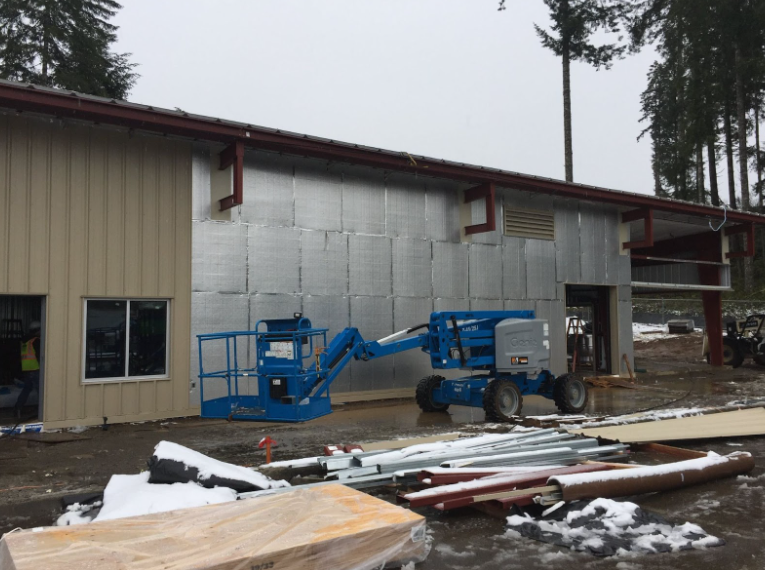
Material properties drive how insulation responds under ignition, heat exposure, and changes in airflow within a wall or roof assembly.
Polyiso Response Under Heat
Polyiso behavior shifts with its facer type and the cladding configuration, and it changes again as cavity ventilation and envelope continuity vary. When exposed to heat, polyiso forms a protective char layer that slows heat transfer and reduces fuel contribution.
Mineral Wool Behavior in High-Temperature Conditions
Mineral wool is produced from molten rock or slag spun into fibers. Its inorganic composition keeps it stable even under high heat. Installers see that stability hold up in the field, making it a reliable option for assemblies requiring noncombustibility.
Fiberglass Performance in Fire-Exposed Cavities
Fiberglass contains glass fibers that resist ignition, but the binder and facers respond differently to temperature. Its performance depends on installation quality, cavity conditions, and adjacent materials. Gaps or compression influence fire behavior by changing airflow patterns within a wall or roof.
Spray Foam Behavior When Exposed to Heat
Spray foam behavior varies significantly by chemistry. The foam’s fuel load, curing characteristics, and expansion profile shape how it responds under heat. Installers notice those differences immediately, and most formulations require an approved ignition or thermal barrier to comply with building codes.
Why Assembly Configuration Still Governs Fire Behavior
Across all materials, fire behavior reflects more than composition. As ventilation pathways open, facers heat, and joints respond to movement, the insulation interacts with heat and flame in ways that depend heavily on the surrounding assembly. These behaviors describe the material alone; its performance in a building depends on placement and the configuration of the surrounding assembly.
Where Fireproof Insulation and Fire-Resistant Assemblies Matter Most
Fire behavior varies across building locations, and insulation must support the performance requirements that apply to each specific assembly.
Exterior Walls in Multi-Story Buildings
Commercial buildings rely on stable fire behavior in locations where heat and vertical pathways can accelerate fire progression. Exterior walls in multi-story buildings often require NFPA 285–tested assemblies to limit flame propagation, yet those same walls must still manage thermal and moisture loads during normal operation. Continuous insulation with stable surface-burning characteristics supports these assemblies when tested as a system.
Interior Fire Barriers, Partitions, and Roof Interfaces
Interior fire barriers and fire partitions rely on controlled temperature rise and limited flame travel within wall cavities. Insulation installed in these locations must align with the fire-resistance rating of the listed configuration. Roof systems experience concentrated heat at mechanical curbs and penetrations, requiring insulation that remains stable as temperatures increase.
Mechanical Rooms, Shafts, and Equipment Enclosures
Mechanical rooms, shafts, and equipment enclosures also benefit from insulation with stable fire behavior. These locations combine high heat loads with electrical components or fuel sources, making a controlled thermal response essential.
Exterior assemblies perform reliably when insulation, barriers, claddings, and fasteners all respond consistently to heat and airflow. Fireproof insulation becomes part of a system that slows fire progression and preserves building integrity long enough for safe egress.
Selecting Insulation Based on Real-World Fire Performance
Selection depends on understanding the conditions each assembly faces during ignition, heat rise, and airflow changes. Insulation must respond predictably under those variables for the system to carry its fire performance in the field.
After identifying the locations where fire-resistant assemblies matter most, choosing insulation depends on the material’s performance within the specific wall or roof configuration.
Materials function as fire-resistant insulation when their ignition and flame-spread behavior slows early fire growth.
As airflow shifts, temperatures rise, and moisture accumulates, fire behavior changes inside the assembly.
Substrate temperature, cavity ventilation, and surface moisture influence how quickly heat moves through a wall or roof during a fire.
Even high-performing materials lose fire resistance when gaps allow convective loops, when facers are damaged, or when attachment systems do not align with the tested configuration.
Commercial Code Context for Fireproof Insulation
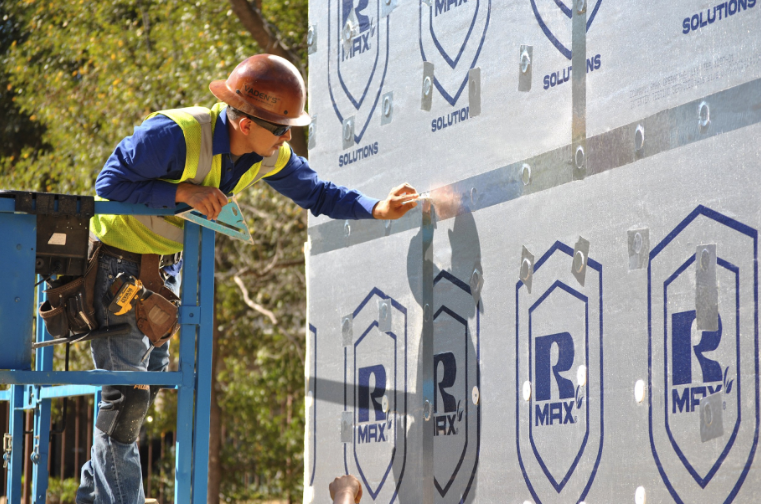
Fire-performance requirements vary by location in the building envelope, and insulation must satisfy the test criteria that apply to its specific position within a rated or non-rated assembly.
Fire-Test Requirements That Govern Insulation in the Codes
Because installation quality influences fire behavior, codes rely on quantifiable test data rather than general labels when evaluating insulation classified as fireproof insulation in everyday language. Surface-burning characteristics must meet the requirements for interior finishes or concealed spaces depending on location. Exterior wall systems may require NFPA 285 review when combustible components appear in the assembly.
Where Polyiso Fits Within Fire-Tested Assemblies
Polyiso insulation commonly appears in assemblies evaluated under ASTM E84 for surface-burning behavior and in exterior wall systems tested under NFPA 285. These evaluations reflect the insulation’s interaction with sheathing, air barriers, claddings, and attachment systems during fire exposure. Specifiers rely on listed assemblies to validate system performance, with local amendments guiding specific requirements.
Select Rmax Polyiso for Code-Aligned Fire Performance
Rmax manufactures polyiso continuous insulation engineered for commercial wall and roof assemblies that must meet modern fire and energy requirements. Each board undergoes surface-burning evaluation and is used in assemblies tested under recognized fire standards to confirm predictable behavior in the field. Contact us today for more information.