
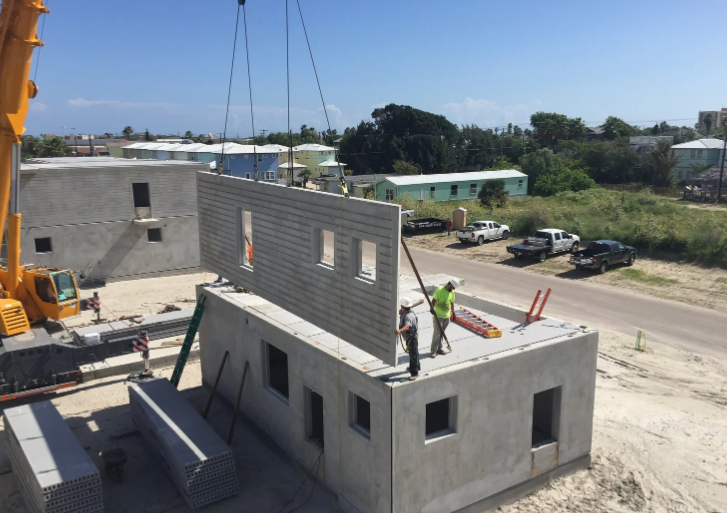
Concrete block walls behave differently than framed walls, which affects how insulation performs over time. They store heat, move temperature across their surface, and interact with moisture in ways that make insulation choice more important than simply selecting a high R-value product.
Homeowners insulating block walls are often working in basements or planning new construction where comfort, durability, and long-term performance all matter. Understanding how block walls behave makes it easier to compare insulation options and choose an approach that fits the space and the project.
Concrete Block Wall Basics
Before comparing insulation options, it helps to understand how concrete block walls are built and why they behave differently than framed assemblies once insulation is added.
How Concrete Block Walls Are Built
Concrete block walls are constructed from concrete masonry units, often called CMUs, which are stacked and mortared together to form the wall. Unlike wood framing, these blocks create a continuous masonry surface that can store and transfer heat across the entire wall. That construction difference is a major reason insulation strategies that work well in framed walls do not always perform the same way on block walls.
Hollow Cores And Heat Transfer
Many concrete block walls are manufactured with hollow cores rather than being fully solid. These cavities help reduce material use and add structural strength, but they do not provide effective insulation on their own. Heat can still move through the block material itself, and insulating only the cores does not address the full surface of the wall where most heat transfer occurs. As a result, block walls can still feel cold and contribute to energy loss even when cavity spaces are filled.
Moisture Behavior In Concrete Block Walls
Concrete blocks interact with moisture differently than wood framing. Masonry can absorb and release moisture depending on surrounding conditions, which influences how insulation performs over time. Insulation systems that account for both heat transfer and moisture movement tend to perform more consistently on block walls, especially in basements and other below-grade areas.
Why Installation Method Matters As Much As R-Value
Because of these characteristics, insulation performance on concrete block walls depends as much on how insulation is installed as on the insulation material itself. R-value alone does not tell the full story. Continuous coverage, surface temperature control, and long-term access all affect how well a block wall performs once insulation is in place.
Block Wall Insulation Options Compared
When homeowners start researching block wall insulation, they are usually comparing options rather than looking for a single recommendation. Concrete block walls behave differently than framed walls, so insulation choices that work well elsewhere can perform very differently when applied to masonry. Understanding how each insulation method interacts with a block wall helps clarify why some solutions feel easier upfront while others deliver more predictable results over time.
Several insulation approaches are commonly used for block walls, especially in basements and below-grade spaces. Each option addresses heat loss differently, and each introduces its own tradeoffs related to installation effort, moisture behavior, and long-term access.
Side-By-Side Comparison Of Common Block Wall Insulation Methods
| Insulation Method | How It Works On Block Walls | Practical Advantages | Common Drawbacks |
|---|---|---|---|
| Spray Foam | Expands to fill surface irregularities and limits air movement | Conforms to uneven masonry; strong initial air sealing | Permanent once applied; difficult wall access later; disruptive installation |
| Batt Insulation With Framing | Creates a finished interior wall with cavity insulation | Familiar materials; quick path to finished space | Can trap moisture; reduces interior space; hidden maintenance issues |
| Rigid Foam Boards | Creates a continuous thermal layer against masonry | Predictable insulation value; cleaner installation; easier future access | Requires careful detailing at seams and transitions |
This comparison highlights why insulation for block walls is not only about thermal performance, but also about how the wall can be accessed, maintained, or repaired in the future.
Pros And Cons Of Common Block Wall Insulation Approaches
Before narrowing down a specific solution, it helps to understand how the most common insulation approaches behave once they are applied to concrete block walls.
Spray Foam Insulation
Spray foam insulation is often attractive because it expands to fill irregular surfaces and can reduce air movement along the wall. For homeowners, this can feel like a comprehensive solution, especially in older basements where walls are uneven. At the same time, spray foam is permanent once applied. That permanence matters later.
Any future access to the wall for foundation repairs, moisture investigation, or structural work requires cutting and removing the foam. Installation can also be disruptive, with overspray control, curing time, and ventilation needs that complicate use in occupied homes.
Batt Insulation With Interior Framing
Batt insulation paired with interior framing is another familiar approach, particularly for finished basements. This method allows homeowners to use standard materials and create a finished wall surface quickly. The drawback is that concrete block walls can transmit moisture, and framing placed directly against masonry can trap that moisture if drying paths are limited.
Over time, trapped moisture can reduce insulation performance and make hidden maintenance issues harder to detect. Framed assemblies also reduce interior space, which may matter in basements with limited headroom or usable square footage.
Rigid Foam Insulation
Rigid foam insulation approaches block wall insulation differently by creating a continuous thermal layer between the masonry and the interior space. Because concrete block walls conduct heat across their entire surface, continuity matters. Rigid foam boards limit heat transfer across the wall while maintaining a consistent insulation value.
Rigid insulation also separates interior finishes from direct contact with masonry, which helps manage condensation risk when temperature differences occur across the wall. For homeowners who want predictable performance without permanently locking off wall access, rigid foam often provides a balanced approach.
Concrete masonry performance varies based on insulation continuity and moisture exposure, which is why concrete masonry unit insulation plays a key role in controlling heat transfer through block wall assemblies.
Cost Versus Performance In Block Wall Insulation
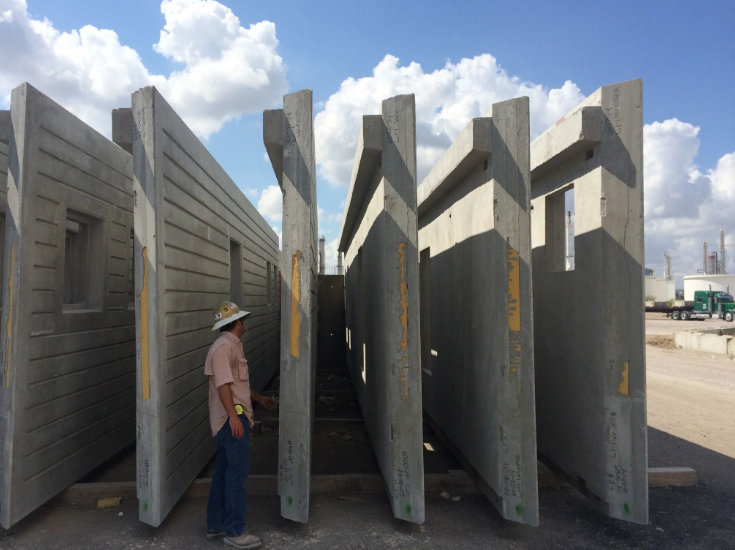
For homeowners evaluating insulation for concrete block walls, cost often becomes the deciding factor. Some insulation methods appear less expensive at the time of installation, especially when labor is minimal or materials are familiar. Upfront pricing is easier to compare. Over time, performance differences tend to matter more.
Insulation that loses effectiveness due to moisture exposure, settling, or limited access can lead to higher energy use and additional repair costs later. Evaluating block wall insulation through a long-term value lens helps balance installation cost against durability and performance stability, rather than focusing solely on the initial price.
Best Block Wall Insulation For New Construction Vs Existing Homes
The location and timing of a project play a major role in insulation decisions.
Basement Block Walls And Below-Grade Conditions
Basement block walls experience different conditions than above-grade masonry walls, particularly where soil contact and seasonal moisture are involved. Insulation for basement block walls must account for cooler wall temperatures and higher moisture potential. In these situations, materials that maintain insulation value without relying on air pockets or fibrous structure tend to perform more consistently.
Exterior Insulation In New Construction
New construction offers more flexibility for exterior block wall insulation. When insulation is placed on the exterior of a concrete block wall, it protects the masonry from temperature swings and keeps the wall mass closer to interior conditions. Exterior insulation of concrete block walls can improve overall thermal performance, but it requires early planning and coordination with finishes, drainage, and weather protection details.
Interior Insulation For Retrofit Projects
Retrofit projects usually rely on interior solutions. Homeowners insulating an existing block wall are often working around finished spaces, utilities, and limited access. Disruption is often the real constraint. Insulation methods that install cleanly and allow future access to the wall surface can reduce long-term risk and frustration.
Get Guidance On Insulating Concrete Block Walls
Rmax manufactures rigid insulation products designed to work with concrete masonry construction. Our team can help you evaluate insulation approaches for block walls based on wall condition, location, and project goals. Contact us today to discuss insulation options that fit your specific application and long-term performance needs.