Rigid Wall Insulation Installation: Techniques for Enhanced Thermal Performance

How well is your building sealed? If you can feel drafts through your walls and around windows or other openings, then your building envelope may be lacking in this area. The culprit? Your building’s outside wall insulation installation method used during initial construction may be to blame. Building insulation performs best when it is continuously sealed.

In this resource, you will learn several tips and tricks to optimize your wall insulation installation techniques to achieve enhanced thermal and moisture performance inside your building envelope.

Why Choose Rigid Insulation Installation for Exterior Walls?

Rigid insulation is a popular choice for exterior walls. There are many advantages to choosing rigid foam insulation, such as polyiso, for your walls—including:

  • High R-Value per inch

  • Not limited by 2x4 framing thickness

  • Provides a flat, smooth surface for exterior finishes

  • Efficient installation with modular board sizes

  • No mess during or after installation

How to Install Rigid Wall Insulation on External Walls

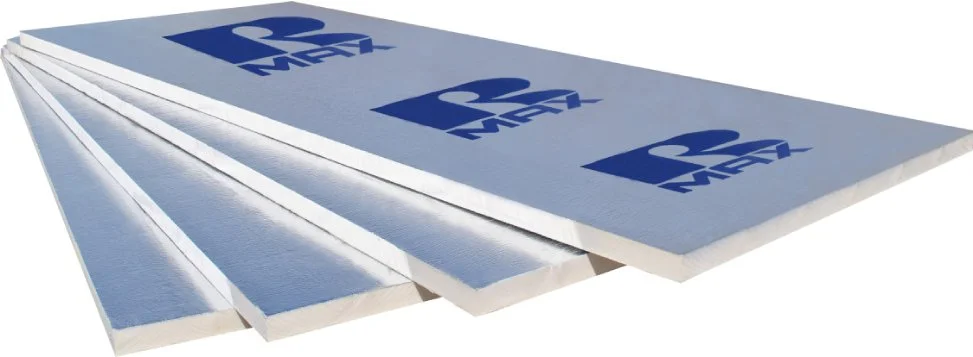
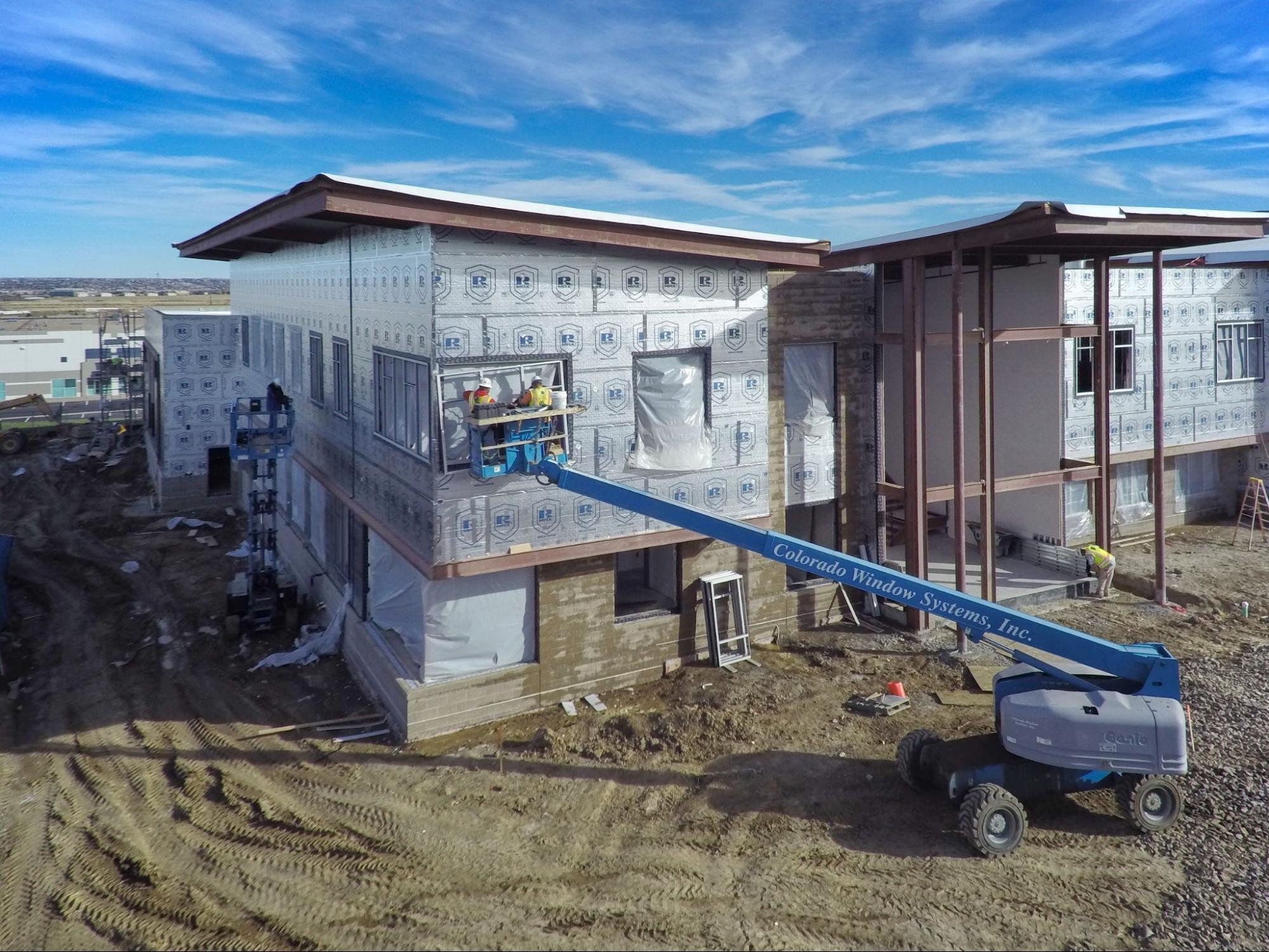
Let’s cover a quick how-to guide on installing polyiso insulation on exterior walls. For this example, we’ll show you how to install Rmax Durasheath® building envelope insulation. This is a closed-cell polyiso foam core with non-metallic, coated glass fiber mat facers.

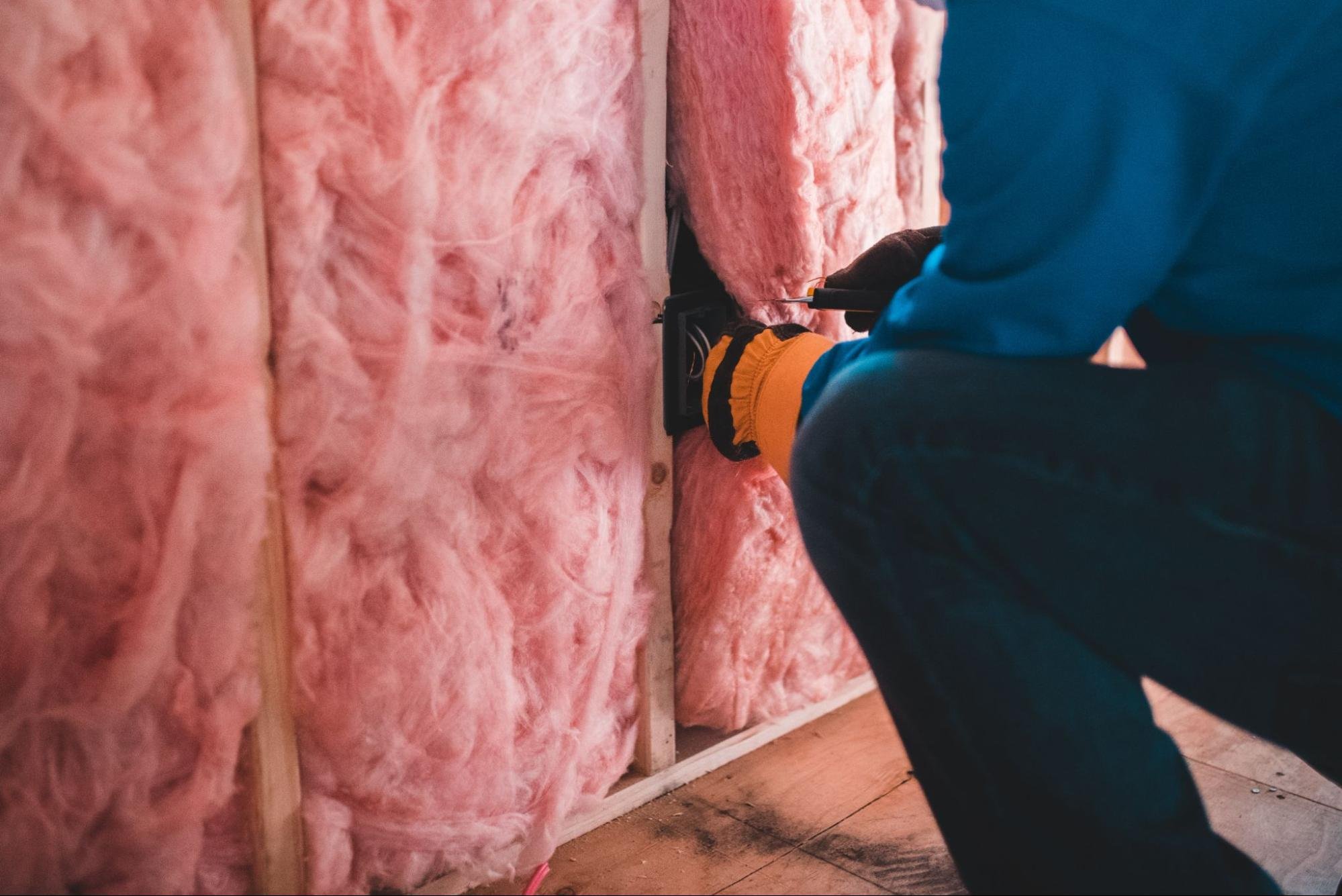
In a residential application, wall insulation installation usually occurs with fiberglass batts between wood stud walls. However, the thickness of this cavity space can limit the insulating power. That’s why some homeowners choose to add continuous insulation to the outside surface of the studs. Adding just one inch of polyiso can add R6 to the thermal resistance.

To install rigid insulation on the external walls of a home:

  1. Place the modular 4’x8’ boards either horizontally or vertically butted against each other. 

  2. Align vertical joints with structural backing and fasten with at least eight screws and washers per board into studs or structural sheathing (such as plywood). 

  3. Continue with an air barrier and/or exterior finish

This particular product does not require joint taping, but it can be installed if desired.

Pro Tips for Sealing Insulation on Wall Installations
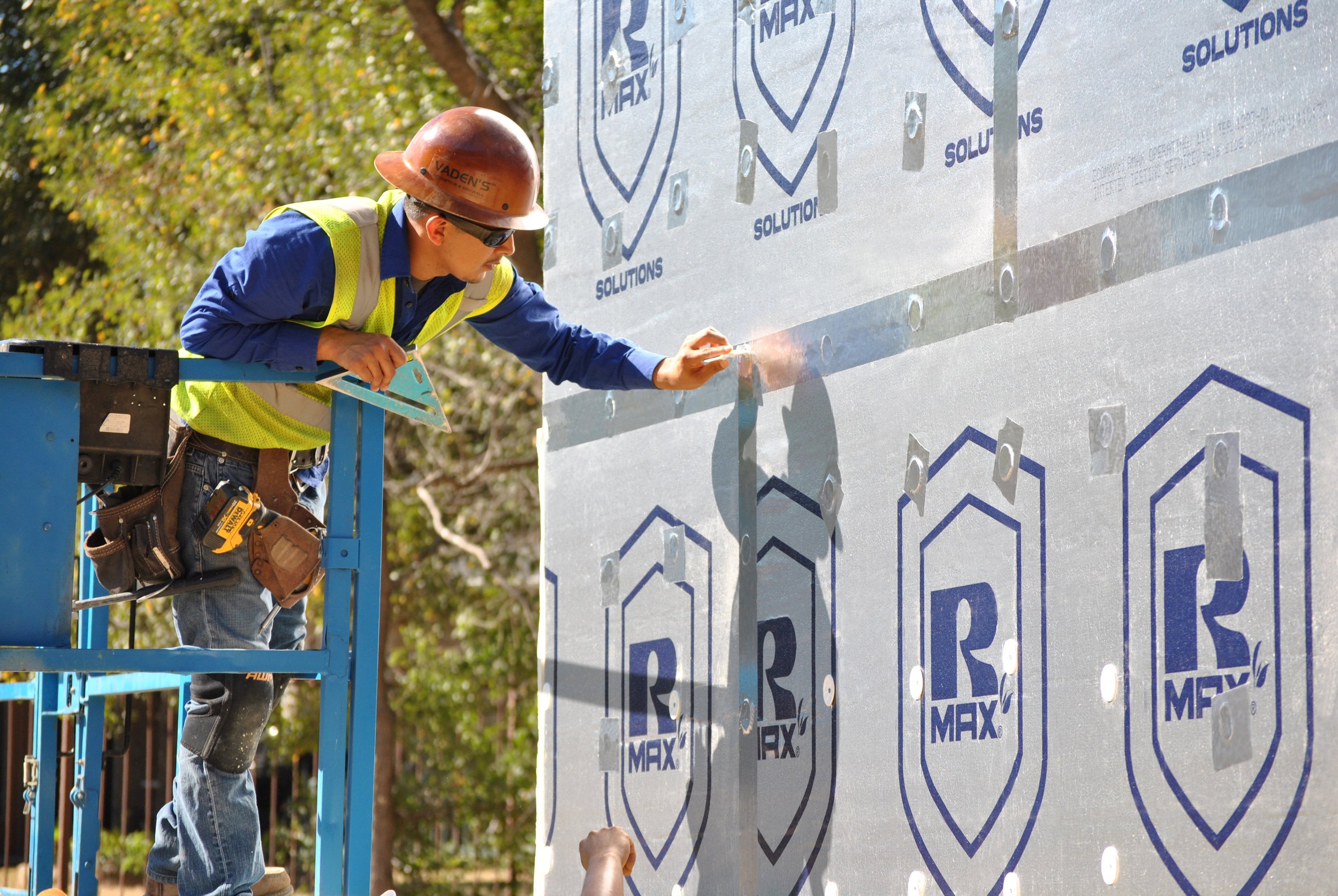
Although not all rigid wall insulation requires sealing, doing so can fortify your structure and significantly decrease heat loss, air leaks, and moisture intrusion. If you’re already installing continuous insulation, why not go the extra mile and seal it up? 

If you decide to seal your joints, we’ll cover the tools you’ll need for installations like the ECOMAXci® Wall Solution, which performs as both the air barrier and continuous insulation. With this application, you’ll seal all the joints between boards (vertical and horizontal) with either tape or liquid flashing, and you’ll detail any penetrations like windows or pipes with 35 mil polyethylene butyl tape.

Tools Required for Wall Insulation Installation

ECOMAXci® can be installed in two ways, either by taping joints or using liquid flashing. 

Here are the tools needed for each method:

For Pressure-Sensitive Tapes

  • Utility Knife

  • Measuring Tape

  • Insulation Knife

  • Rubber Hand Roller

  • Cordless Impact Driver

Additional Tools For Liquid Flashing Details

  • Plastic Putty Knife

  • Wet film Thickness Gauge

  • Caulk Gun

  • Spatula 

Once you’ve got your tools, you’ll also need to have the right building materials. Besides your insulation, you’ll need plenty of fasteners, washers, tapes, and sealant on the jobsite.

Materials Used by Pros in Outside Wall Insulation Installation

  • Insulation Boards

  • CI Prong Washers for wood or metal studs/backing

  • Grip Deck Self-Drilling Screws or other appropriate anchors

  • R-seal 3000 (joint tape) or R-seal 2000LF (liquid flashing)

  • R-seal 6000 (for windows/penetrations)

Choosing the right materials for the job is one way you can optimize your installation. Since there are various types of fasteners, tapes, and accessories available, check with your Rmax representative to recommend which product is best for your project’s application.

Tips for Reducing Wall Insulation Installation Costs

Here are a few pointers to get you started on the right track:

Watch Installation Videos

Watching the manufacturer’s installation videos is a great way to understand the process before you begin your external wall insulation installation. Find several installation videos from Rmax for their current products in their “Installation Guides and Videos” section online, including:

Plan Your Layout Before You Begin

You can save a lot of time by investing a little up-front time planning before you begin the installation process. Some factors to consider before you start rigid insulation installation on exterior walls include:

  • Decide which fastener type to use with your wall. 

  • Purchase a little more than you’ll need to account for waste (typically between 3-10%).

  • Study the manufacturer’s recommended fastening pattern to familiarize the layout.

  • Buy the correct length fasteners (1” penetration into your substrate).

  • Make a jig that helps you locate the studs more easily for fastening.

  • Decide whether you’ll lay your boards vertically or horizontally. 

More Installation Tips

Finally, you’re ready to install, here are a few more pointers to help things move smoothly.

  • Keep cut boards so you can use them later in the installation when possible.

  • Do not countersink screw heads (keep flush).

Rmax Can Help Your Installation Run Smoothly

Rmax has worked with countless contractors during the installation process and is standing by in case you have any questions or need guidance during the process. 

Contact your local Rmax representative today to start planning!

Building Safe and Efficient: Insulation Requirements in North Carolina Explained

The Tar Heel State faces a wide range of temperature variations throughout the year with the change of seasons, often ranging from below zero to above 90℉. Depending on which part of the state you’re in, the climate can be dramatically different from the coast to the Western inland.

To keep buildings safe and running efficiently with its highly variable climate, representatives of the North Carolina Building Code Council (BCC) adopt and amend construction guidelines to oversee progress. In turn, this supports the construction of structures that are compatible with the climate and landscape. 

If you’re building or remodeling in NC, it’s important to become familiar with these codes. While there are codes for everything from accessibility to plumbing and electrical—in this article, we’ll be focusing on the North Carolina building code insulation requirements. 

Current NC State Building Code

Building codes are changing all the time. That’s why there is a council to review the codes and implement changes when necessary for the sake of safety or systems improvement. Find the current list of adopted codes on the NC Office of State Fire Marshal website. 

A significant portion of the current version of NC building codes is based on the ICC 2015 International Codes and went into effect in 2019. This version is referred to as the 2018 NC Codes and it includes ten books. 

Of those ten sets of guidelines, the two that we will focus on for NC building code insulation requirements are the following: 

What Are the North Carolina Building Code Insulation Requirements?

Taking a look at the two code books listed above, we can decipher what the requirements are for NC building code insulation. Let’s take a look at both residential and commercial construction insulation code requirements.

First, we’ll break down the state by climate zone. North Carolina consists of three distinctive climate zones, including:

  • Climate Zone 3A: South and East NC (Warm Humid)

  • Climate Zone 4A: North and West NC (Mixed Humid) 

  • Climate Zone 5A: Northwest corner of NC (Cool Humid)

Residential NC Building Code Insulation Requirements

North Carolina’s 2018 residential code for single and multi-family residential structures under three stories is based on the International Residential Code (IRC). The required values are shown in the table below for various wall types and other components of the building envelope.

Residential R-Value Code Requirements in NC:

*R-value requirements may be less for air-permeable/impermeable attics.

When evaluating North Carolina building code wall insulation requirements for homes, you’ll notice that in climate zones 4 and 5, you have the option to combine cavity wall insulation with continuous insulation. For example, if you’re constructing a building with wood studs, you can use R13 cavity insulation between the studs, plus R5 continuous insulation. The additional insulation, if polyiso is used, requires less than an inch of continuous insulation installed on the exterior side of the studs. ½” thick Rmax Durasheath® carries a thermal insulating resistance value of R3, which exceeds the code requirement for this construction application.

Commercial NC Building Code Insulation Requirements

The North Carolina Energy Conservation Code applies to non-residential, commercial structures including businesses, hospitals, and government buildings for both new construction and remodeling projects. This code follows the requirements of the ANSI/ASHRAE/IESNA 90.1 standard. You’ll find the R-value requirements for North Carolina commercial construction projects in the table below.

Commercial R-Value Code Requirements in NC*:

*These values may differ from the requirements of commercial buildings that contain residential dwellings, or from metal buildings. 

As you can see in the chart above, the North Carolina building code wall insulation requirements show increased R-values for several applications in commercial buildings when compared to residential construction projects. One notable difference is the increased requirement of continuous insulation throughout the envelope, from the floor, up the walls to the rooftop. 

Polyiso board insulation is one of the best products on the market to achieve continuous insulation assemblies and meet code requirements. For example, Rmax Thermasheath® carries an R-value of R6 per inch, so you can achieve R7.5 with a single layer of 1-¼” boards.

Meet North Carolina Building Code Insulation Requirements with Rmax

As a trusted manufacturer in the insulation industry for over 45 years, Rmax has been here throughout the years of evolving building codes and increased energy efficiency requirements. We have developed insulation solutions to meet and often exceed code standards and our North Carolina representatives can help make sure your next project is insulated with the right materials. 

Reach out to your local Rmax representative today!

Wall Board Insulation: Enhancing Comfort and Energy Efficiency

All buildings, both commercial and residential, have character, and a major factor that plays a role in creating that character—is how the occupants feel while inside the building. Is your building putting visitors at ease with a cozy and comfortable ambiance, or keeping them at a distance with a cold and clammy atmosphere? The difference is in the materials.

You can change your building’s attributes simply by altering your insulating strategy. When it comes to creating comfort in your home or commercial building, thermal insulation can make or break your environment. 

Since walls make up the majority of a building’s surface area, it’s an ideal place to focus on when designing an enhanced comfort and energy-efficient structure. Let’s learn more about wall board insulation.

What is Wall Board Insulation?

Wall Board Insulation

Wall board insulation goes by many names. It’s commonly referred to as rigid insulation, foam board, rigid foam, bead board, foam insulation, board insulation, polyiso, and more. The term “wall board insulation” does not necessarily refer to a single type of insulation material, but rather the general shape of the material and the way the insulation is installed.

Foam board wall insulation is made up of thin, rectangular panels of insulating material in various sizes—think of it as the foam-core poster boards you used to use in school to present your science fair project, but thicker. Thicknesses vary from around ½” to over 6” in some materials. Typical dimensions of foam insulation boards are similar to what you’d find in the plywood selection at your local hardware store, including 4’x8’ and 4’x4’ boards. 

Typical materials used for wall board insulation include the following:

  • Polyisocyanurate (Polyiso or iso)

  • Extruded Polystyrene (XPS, blue board, or pink board)

  • Expanded Polystyrene (EPS or bead board)

  • Mineral Wool Boards

Each of these materials has its pros and cons and they all are used in construction, from the below-grade foundation level up to the rooftop.

Why Choose Wall Insulation Foam Board for Your Project?

To contrast wall board insulation to other types of insulation, we’ll need to identify other common ways to insulate walls, which include:

  • Fiberglass batt insulation

  • Spray foam insulation

  • Loose-fill and blown-in

Insulation wall boards are different from these other types and come with some unique advantages, including easier installation, increased R-values, better fire resistance, and the ability to customize the installation.

For example, let’s compare the R-values, in descending order, of various materials per a one-inch-thick application.

As you can see, board insulation does the job when it comes to achieving a high thermal R-value with less thickness. Closed-cell polyurethane slightly outperforms polyiso, but it’s important to take into consideration that spray insulation may require multiple layers to achieve the same thickness that can be installed in one effort with board insulation. That means you can achieve comfort and energy efficiency with less material, quicker labor, and often—less expense.

Another clear advantage of board insulation is the simplicity of installation and lack of a mess that comes with loose-fill, spray foam, and blanket insulation. Rigid board insulation material can generally be easily cut-to-size by scoring with a razor knife and snapping to size by hand. Plus, there’s no mess or clean-up after installation. What you get is a professional and clean final product finish for your wall.

Polyiso board insulation can be customized to fit your project’s needs by adding additional properties in the facers. For example, Thermasheath® is a polyiso foam core bonded to reinforced aluminum foil facers on both sides, while other boards can feature fiberglass facers or even laminated plywood.

Where to Use Thermal Insulation Wall Board

Thermal insulation wall board is a versatile material due to its modular nature. Common applications of these rigid insulating materials include:

  • Exterior wall insulation board

  • Interior basement wall board insulation

  • Exterior concrete walls 

  • Foundation waterproofing protection board

  • Thin wall insulation board applications

Exterior wall insulation boards are advantageous because they do not need to fit within the wall cavity space. With continuous insulation, such as polyiso boards, building owners benefit from the energy savings, and contractors can achieve the desired R-value thickness outside of the building’s occupied space.

Get the Best Price on Wall Insulation Board

Rmax carries a wide range of Polyiso wall insulation board products for your next construction project. Whether you’re looking for an exterior continuous insulation solution for a masonry or steel stud wall such as Durasheath® or a fire-resistant plywood backing system like ECOMAXci® FR Ply for cladding attachment, Rmax representatives have you covered.


Reach out today to find out what your best insulating options are and we’ll get you in touch with the right professionals to get you a comprehensive thermal insulation wall board price list!

Insulation for the Long Haul: The Advantages of Continuous Insulation Over Cavity

If you’ve ever lived in an old or historic home, you may have noticed that it’s quite leaky and doesn’t hold the heat in too well in the dead of winter. That’s because homes that were constructed more than 50 years ago were often missing a component that we consider crucial today: insulation. 

Insulation serves many purposes in the home, including:

  • Increased thermal comfort

  • Reduced heat loss from heating and cooling

  • Acoustic properties

  • Reduction of condensation

The History of Insulation Types in Old Homes

Construction methods have evolved throughout history by capitalizing on different materials and methods available at the time. Consider a rustic log cabin—often, the thickness of the load-bearing exterior wooden walls was all you got in terms of insulating value. Likewise, many historic homes were constructed of thick masonry walls that provided some thermal gain advantages, but lacked a separate type of home insulation for walls.

We didn’t start to see the insulation that we have in a typical residential home today until after 1965, when building codes began requiring it. From that point forward, builders began using fiberglass batts in the wall cavity for standard home construction, among other methods. 

Continuous Insulation vs Cavity Insulation

What Are the Different Types of Home Insulation?

In residential construction, there are many types of insulation for homes. Depending on each wall type, you have various options to choose from. 

Masonry Cavity Walls

For example, modern masonry walls are constructed as veneers rather than solid brick. With this construction method, there is an air space cavity between a column of concrete block and the exterior-facing brick veneer. A cavity wall system includes several components, including insulation. A masonry cavity wall can accept many home insulation types in the following forms:

  • Mineral Wool Boards

  • Polyisocyanurate Boards

  • Polystyrene Beads

  • Spray Foam

  • Fiberglass Batts

Wood Stud Wall Cavities

On the other hand, wood stud walls commonly used in residential construction are often insulated with fiberglass batts between the studs. Still, there are even more different types of insulation used in homes, including cellulose loose-fill, polystyrene foam panels, and even structural insulated panels or insulating concrete forms.

The Best Type of Insulation for New Home Construction

When choosing the best type of insulation for home applications, it’s important to look at all of your options. With the increased focus on sustainability and enhanced energy efficiency, you might be looking for the best type of home insulation and it might not be what you think. 

Traditional fiberglass batts in wood stud walls, for example, are limited in R-value to the width of the studs being used since the wall can only be 3-½” thick for a 2x4 stud wall. This material also fails to address thermal bridging and does not carry a continuous R-value across the wall surface.

The best home insulation types are those that provide an adequate thermal barrier for your climate. In some applications, it might be easier and less expensive to achieve the desired thermal values by using continuous insulation in the form of rigid foam boards.

Continuous Insulation vs. Cavity Insulation

Continuous insulation is a rigid board often used on the exterior of walls or roofs. It is installed uninterrupted and provides a consistent R-value across the entire surface area of the envelope. Polyiso and other continuous insulation products can be installed on either side of stud walls, foundation walls, basement walls, roofs, attics, and more. 

When comparing home insulation types pros and cons, continuous insulation comes out on top because it provides:

  • Continuous and consistent thermal values

  • Virtually unlimited space to install the insulation to achieve desired R-Values

  • High R-Value in a minimal thickness 

  • Fast and easy installation in both new construction and retrofit applications

If a cavity wall is a must-have in your home project, you can still use polyiso or other rigid foam boards. These versatile insulating materials can be installed inside the cavity, as well as used in a continuous application on one side of the cavity wall. 

Best Types of Insulation for Your Home

If you’re looking for specific types of home insulation products, below are some offerings that are great options for residential applications for continuous insulation:

Residential Wall Insulation

Rmax carries a wide range of home wall insulation types that can be applied in a manner that achieves continuous insulation. This includes below-grade applications such as Thermasheath® that doubles to protect your waterproofing and also provides thermal comfort in your basement.

Thermasheath®-SI can be used as structural wall insulation, or Therma Base-CI™ can be used to provide a nailbase backing for exterior finishes. Durasheath® is another energy performance option for insulating narrow spaces in homes such as cavity walls.

Residential Roof Insulation 

Your vertical surfaces aren’t the only ones that you’ll want to insulate. Heat often escapes through attics, ceilings, and roofs. Here are some types of home insulation materials used in roofing applications:

  • Sarnatherm® Iso

  • Sarnatherm® CG

  • Sarnatherm® Roof Board

Let Rmax Find the Best Type of Insulation for Your Home Design

So, what is the best type of insulation for a home? If you’re making that decision, Rmax can help you choose the best type of home insulation for your project. Rmax offers a wide variety of polyiso solutions to get your home insulated better than you could ever imagine and we have innovative solutions that will work with your design to achieve the thermal values you desire. 

Reach out to your local representative today for help with your project!

Making a Difference with Sustainable Insulation: A Comprehensive Guide

Your next project has the potential to make a difference. That’s because buildings have a massive impact on the environment—encompassing everything from waste in landfills to carbon dioxide emissions to energy consumption.

Sustainable Insulation

Even if you’re not looking to get your project LEED certified, you can still choose more sustainable materials so that your building could potentially produce a net positive rather than a net negative effect on the world. That’s what sustainability is really all about; living in harmony with the natural world. This is your opportunity to choose materials that are more compatible with nature. Let’s find out how.

How Buildings Play a Role in Creating a Sustainable Future

None of us live forever, but it’s likely that our buildings, and the effects of how we live today, will outlast us and continue to impact future generations for years to come. 

While historic buildings have lasted hundreds and some even thousands of years if well-maintained, today’s buildings aren’t lasting so long. The estimated lifespan of a college campus building is 75 years, and most single-family homes are lucky to last a hundred.

One simple way to make a difference is by picking the right building materials. By choosing more durable building materials, you can fortify your building’s defenses against the elements and improve the longevity of the structure. Although your structure may not last thousands of years, it’s still important to consider the environmental impacts during its lifespan.

Buildings, both residential and commercial, affect the environment in several ways, including:

  • Energy Consumption

  • Carbon Emissions (read more here)

  • Resource Consumption

  • Construction Waste

Luckily, designers and builders can work together to reduce the negative impact caused by these factors. One major way to reduce the building’s impact is reducing energy consumption by choosing sustainable insulation materials. When you reduce unintentional heat exchange (heat loss) through the building envelope, you affect the degree to which your building impacts the environment. You’ll want to select sustainable insulation that adequately insulates the building envelope in order to increase energy efficiency.

What is Environmentally Sustainable Insulation?

So, how do you find and select building materials that are truly environmentally sustainable? 

Environmental Product Declarations

One way is to review Environmental Product Declarations (EPDs). These documents are provided by manufacturers and third parties and provide the results of studies that show the environmental impact of the specific product. 

For example, the Polyisocyanurate Insulation Manufacturers Association (PIMA) has provided third-party EPDs for polyiso showing that over a building’s lifespan, polyiso has 47x energy savings when compared to the energy required for the following processes:

  • Initial manufacturing

  • Transportation to job sites

  • Lifetime maintenance

  • Decommissioning and disposal

LEED-Certified Products

LEED credits worksheets, provided by manufacturers, are another way to understand how a building material can impact the environment for the better. These documents name the sustainable category and give a description of how the material meets the LEED requirements. Sustainable building insulation will typically possess the potential to meet the following LEED credits:

  • Energy & Atmosphere Credit (EA)

  • Materials & Resources Credit (MR)

  • Environmental Quality Credit (EQ)

More Considerations for Finding Sustainable Insulation Solutions

According to the EPA (Environmental Protection Agency), when shopping around for the best sustainable insulation for your project, the primary factors to consider are the following:

  1. R-value per inch (Higher is better)

  2. Limited or no toxins or VOCs

  3. Recycled content

  4. Low emissions

  5. Low energy required to manufacture (embodied energy)

  6. Sustainable sourcing of raw materials

  7. End of life disposal options including recycling or reusing

You can identify products that qualify by locating ecolabels, including certifications such as Intertek Clean Air for indoor air quality, GREENGUARD for chemical emissions, and ENERGY STAR® for energy efficiency. 

Types of Sustainable Insulation

Insulation materials that rank high on the sustainability scale include rockwool, concrete, and polyisocyanurate. Polyiso is one of the most sustainable insulation materials in board form because it boasts the following properties:

  • High thermal efficiency (High R-Value) 

  • Zero ozone depletion potential

  • High recyclable content 

  • Negligible global warming potential

Examples of less sustainable insulation products include styrofoam, fiberglass, and spray foam, which can have a negative impact on the environment in terms of ozone depletion, hazardous materials, or harmful emissions. 

Rmax’s Commitment to Sustainable Thermal Insulation

Rmax is a leader in the industry when it comes to shifting toward more sustainable practices in the construction industry, including the manufacturing of more environmentally-friendly building materials. 

As evidence to this claim, Rmax polyiso products currently meet several criteria for LEED credits. The majority come from enhanced energy performance offered by polyiso products. One earning possibility even includes innovative solutions, such as the Rmax® ECOMAXci® Wall Solution that acts as an air, water, vapor, thermal and hygrothermal barrier all-in-one.


Read more about the company’s sustainable design initiatives and reach out to your local Rmax representative to find sustainable insulation solutions for your next project!

Florida Building Code Insulation Requirements

There’s a reason that snowbirds flock to Florida each winter. The warmer temperatures and humid climate provide relief from the cold and dry winters that many of them have to face throughout a big chunk of the year. The unique climate of Florida is only shared with a few other locations, such as South Texas and the southern tips of the states between Florida and Texas.

Florida Building Code Insulation Requirements

The unique climate also brings unique challenges when it comes to construction and building design requirements. With such a large cooling load, high humidity, and coastal considerations, structures in Florida require some special attention. 

That’s where building codes come in. Brush up on the fundamental code requirements in the state of Florida to make sure your next project is up to code.

The Basics of Florida Building Codes

Building codes are a set of guidelines that help keep buildings safe, accessible, and energy efficient. 

Common Building Codes

There are many different building codes. Here are a handful of some different realms that building codes can cover:

  • Energy Code

  • Structural Code

  • Life Safety Code

  • Plumbing Code

  • Fire Code

  • Electrical Code

  • Accessibility Code

  • Zoning Code

A Focus on Energy Code Requirements 

For the purpose of this article, we’ll be focusing on energy codes for Florida. Energy codes are designed with geographical location at the forefront in order to ensure buildings are energy-efficient for the local climate. In other words, the Florida building code roof insulation R-value will vary greatly from the R-value requirements in Maine.

The energy code sets the standard for the following building systems:

  • Insulation Requirements

  • Heating and Cooling System Requirements

  • Windows and Lighting

Florida Building Codes

Generally, building codes are written on a national scale by organizations, such as the International Code Council (ICC), and then adopted at the local level. Florida and other states, as well as local governments, adopt and modify these model codes while also writing their own laws to deal with the various factors impacting local construction.

Florida’s energy code is called the Florida Energy Conservation Code, or FECC. This code, last updated in 2020 as the 7th edition, applies to both residential and commercial buildings. This set of regulations adopts the model code known as 2018 IECC and ASHRAE 90.1-2016 as its basis.

Florida Building Code Insulation Requirements

Before you build in Florida, one of the first steps to planning requires a review of code requirements. Even within the state borders, these code requirements can vary depending on geographical location, particularly for energy codes. The International Energy Conservation Code (IECC) provides a climate zone map as a starting point and the Florida energy code further breaks down this map by county.

Inside Florida, there are two major climate zones, according to the IECC Climate Zone Map. They include:

  • Zone 1A: Very Hot and Humid - Includes a handful of the southernmost counties of Florida including Miami-Dade county

  • Zone 2A: Hot and Humid - Includes most of Florida

Commercial Buildings in Florida

Florida building code insulation R-value requirements for commercial building envelopes are listed in Chapter 4 [CE] of the FECC and shown in the table below:

*Florida building code attic insulation requirements can be reduced from R38 to R30 if one of the following conditions is met:

  • Continuous insulation is used over 100% of the ceiling area and over the top plates at the building eaves.

  • There is insufficient space to accommodate the R38 requirement in the roof or ceiling assembly.

Residential Buildings in Florida

Florida building code exterior wall insulation R-value requirements for homes and residential structures are found in Chapter 4 [RE] of the FECC. These values match the similar requirements as commercial structures and are listed below in the table:

*R38 values can be reduced to R30 if one of these conditions is met:

  • Insulation continues over the entire ceiling area and over the top plates at the eaves.

  • There is a lack of space to meet the R38 requirement in the roof or ceiling.

Insulation Products that Meet Florida Building Code

Insulation is an essential building material required to meet Florida building code. Meet code insulation requirements by choosing materials that pack a punch with high thermal resistance R-values per inch while also meeting testing requirements.

One insulation product category that exceeds both of these prerequisites is polyisocyanurate, or polyiso. Rmax polyiso products offer superior R-value with minimal thicknesses. For example, R30 ceilings can be achieved in less than 5” with two layers of 2.5” Rmax Durasheath® insulation, for a cumulative R-value of 30.6.

Walls and floors can achieve R13 insulation in 2” with Rmax Thermasheath® insulation or ECOMAXci® FR insulation. For an all-in-one solution that combines continuous insulation and air barrier, the Rmax ECOMAXci® FR Air Barrier is an ideal solution.

Meet Florida Building Code with Code-Compliant Insulation

If you’re ready to select your building materials for your construction project in Florida and want to make sure you’re meeting Florida building code insulation requirements, Rmax can help. We offer a wide variety of code-compliant, energy-friendly, and easy-to-install insulation solutions. 

Let our representatives help you today to pick the right products for your project’s building envelope.

Understanding LEED Certified Insulation

If you’re in the construction industry, you’ve probably heard of LEED certification. Whether you know a little or a lot about LEED, it’s hard to know it all. It can be a blessing to have so many methods to achieve LEED-certified status of your building, but it can also quickly lead to information overload. 

If you are looking for ways to earn LEED points—your building’s envelope holds a lot of potential, and your insulation selection is critical to making your building more sustainable. Learn more about the program and LEED insulation requirements below.

What is LEED Certification?

LEED is the acronym for “Leadership in Energy and Environmental Design.” This program was created by the U.S. Green Building Council (USGBC) to inspire construction practices to become more environmentally friendly and sustainable and to make buildings healthier.

Any building type, from new construction to renovations in both residential and commercial settings, can earn LEED-certified status. Each building type has a corresponding scorecard for builders and designers to check off qualifying components in various categories. These categories address the entire construction process and building lifecycle. 

LEED Certified Insulation

The categories include:

  • LT - Location and Transportation 

  • SS - Sustainable Sites 

  • WE - Water Efficiency 

  • EA - Energy and Atmosphere 

  • MR - Materials and Resources 

  • IEQ - Indoor Environmental Quality 

  • IN - Innovation 

  • RP - Regional Priority 

Depending on your project type, your scorecard requirements may vary. There are four levels of LEED certification:

  1. Certified: 40-49 Points

  2. Silver: 50-59 Points

  3. Gold: 60-79 Points

  4. Platinum: 80+ Points

How can you achieve LEED certification for your project? Let’s take a closer look at how your building’s envelope can bring LEED credits your way.

How to Meet LEED Insulation Requirements

Insulation can help you earn points toward LEED credits in multiple categories. Everything from where you source materials to how well the building materials conserve energy can impact your score.

Since insulation often covers the entire surface area of your building—it’s in your walls, attics, roofs, and sometimes underfoot—it’s critical to take this building material into account for energy efficiency. 

Below are the LEED Insulation Requirements for each category:

Energy and Atmosphere Credits

The Energy and Atmosphere (EA) category has four required credits, including: 

  1. Fundamental Commissioning and Verification

  2. Minimum Energy Performance

  3. Building-Level Energy Metering

  4. Fundamental Refrigerant Management

The remaining credits hold the potential for up to 33 points for commercial projects and focus on enhancing energy performance, of which up to 20 points can be reached through altering your insulation. 

Meet the requirements of the EA category by choosing the right insulation products that meet or exceed the ASHRAE 90.1 energy standard and achieve higher efficiencies.

Materials and Resources Credits

The Materials and Resources (MR) category has two required credits:

  1. Storage and Collection of Recyclables

  2. Construction and Demolition Waste Management Planning

The remaining credits offer up to 13 additional points toward your LEED score in areas that include raw material sourcing, material ingredients, waste management, and building life-cycle impact reduction.

Insulation can help you meet the MR criteria in several ways:

  • Low waste accumulation, such as rigid insulation can be cut on-site and fit into any space.

  • Insulation can also be reused or repurposed for other projects.

  • Certain insulation products contain recycled content.

  • Select insulations carry zero Ozone Depletion Potential (ODP).

Indoor Environmental Quality Credits

Insulation can help you earn points toward the IEQ credits on your LEED scorecard. Low-emitting materials, indoor air quality, thermal comfort, and acoustic performance are examples of earning opportunities in this category.

Innovation and Design Credits

You wouldn’t think of insulation first when considering innovation and design, but there is a way to boost your LEED score in this category. Earn up to 5 additional points in LEED-ID by choosing an innovative wall solution such as Rmax ECOMAXci®, which combines an air/weather barrier with continuous insulation in a single layer to virtually eliminate thermal bridging while meeting fire, air, and water code requirements.

LEED Certified Insulation Options

By targeting the above LEED categories and credits, you can begin to narrow your focus to picking the right products for your project’s design. Is there such a thing as “LEED certified insulation”? If so, which LEED insulation should you choose? If not, what do I look for to meet LEED insulation requirements?

The answer is no—there are no LEED-specific materials. Rather, certain materials—including insulation—can help you earn points toward achieving the credits mentioned above. As a component of a whole system, building insulation can help you meet LEED requirements and earn additional points.

When selecting insulating materials for your LEED project, be sure to pick materials that meet code standards at a minimum. For example, Rmax Polyiso insulation meets or exceeds these ASHRAE standards:

  • ASHRAE 90.1: Energy Standard

  • ASHRAE 55.2: Thermal Environment Design Standard

You can also check Rmax LEED resources to be sure you’re using the most up-to-date references. One reason that polyiso is such a valuable insulation for LEED certified projects is that you can achieve a superior R-value with less material (a thinner profile). 

Polyiso is versatile and can be used around the entire building envelope, from the foundation, up the walls, to the roof. 

Get Help Picking the Right Insulation for Your LEED Project with Rmax

Interpreting the LEED requirements can seem like a monumental task. If you need help navigating and picking the right building materials to achieve LEED certification, Rmax can help. Our experts can tailor a solution to meet your site-specific needs. 

Call or email your local Rmax representative today! your local Rmax representative today!

Rigid Foam Board or Spray Foam Insulation: Which is Right for Your Project?

When the outdoor air temperature swings from hot to cold, a building’s insulation regulates the temperature inside. The heating and cooling system of a well-insulated building doesn’t have to work as hard - and that results in cost and energy savings for you. Insulation also provides thermal comfort and protection from extreme weather.

Life-safety and energy-efficiency are why building codes, often modified by state code officials to be climate-specific, require that plans for a construction project demonstrate that the proposed insulation for exterior components - roof, walls, foundation - will achieve specific R-values before a building permit is issued. If you’re not familiar with R-values, they indicate how well insulation resists heat loss. The higher the R-value, the better the insulation.

Many types of insulation are available, made from different materials and with different methods of application. Understanding the advantages and disadvantages of each type helps builders, architects, and homeowners make the best choices for their project. Two common types of insulation are rigid foam board and spray foam.

So, how do you decide between them?

Rigid Foam Board Insulation: High R-Values Per Inch

Rigid foam board insulation is foam plastic that has been hardened and formed into sheets that are easy to cut on site. Most rigid foam boards are made from one of three types of plastics: polystyrene, polyisocyanurate (polyiso), and polyurethane.

Rigid foam insulation offers very high R-values per inch of thickness. This becomes important during the project’s design phase when the team is figuring out how to insulate the structure to meet R-values required by the building code. Rigid board insulation increases the wall assembly’s R-value without a significant increase in the overall thickness of the wall. If you want to maximize interior space, keeping the exterior wall thickness to a minimum is essential.

Spray Foam Insulation: Expands to Fill Any Space

Spray foam insulation also offers extremely high R-values. Most often made from liquid polyurethane and a foaming agent, spray foam insulation is applied using a spray can for small cracks and air leaks, or blown in with a pressure-sprayer for larger applications (referred to as “foamed-in-place”). The liquid foam expands and hardens as the material cures. Because its shape conforms to the space in which it is applied, spray foam provides an effective air barrier and is excellent for use in hard-to-reach places, and curved or irregular spaces.

The two types of spray foam are open cell and closed cell. Open cell is lighter and more pliant with foam bubbles that expand, burst, and fill with air. Closed cell is much denser and durable; its cellular structure is closed and filled with gas.

Rigid Foam and Spray Foam: Installation is the Key Difference 

Rigid foam boards and spray foam insulation are installed using completely different methods, which informs the decision of which product to choose.

Because it can be sprayed on, blown in, or poured, spray foam insulation is frequently used in retrofits and remodels to fill in existing wall cavities and awkward spaces like attics, where other types of insulation might be difficult or impossible to install. Spray foam’s high R-value makes it a good choice when an existing wall or roof cavity needs to be brought into energy code compliance.

Rigid foam boards are cut to fit and then mechanically attached to the structure. Often seen in new construction, rigid foam boards can be used to insulate just about any part of the building from foundation to roof. They’re commonly part of exterior wall assemblies, including below-grade walls. Some rigid insulation boards are made specifically to be exposed on interior walls of structures like parking garages or farm buildings. Others are manufactured with air and water barriers on one side, eliminating the need to buy and install additional products.

Advantages of Rigid Board Insulation

Cost

Rigid foam insulation boards are less expensive to install than spray foam. Special equipment and certified installers are typically required to install spray foam insulation.

Thermal Performance

Rigid insulation boards are installed continuously over the studs preventing thermal bridging and heat loss. 

Ease of Installation

Rigid foam can be cut to fit on site, and attached to roof or wall structure. When multi-functional boards with integral air and water barriers are used, additional time and money is saved.

Basement Insulation

Rigid foam boards are very well-suited for insulating basement walls as they are water-resistant and easily installed by adhering them to the foundation walls behind the studs.

Rmax Rigid Foam Insulation Boards

Rmax is a leading manufacturer of polyiso rigid foam insulation boards with a variety of products to suit any insulation need. If you decide that rigid foam insulation boards are the right choice for your project, Rmax is happy to provide more information and answer any of your questions. Contact the experts at Rmax today.

Is Polyiso Insulation Waterproof?

Your building envelope has one job, to keep the elements out. To accomplish this job, the envelope is composed of a system of components that collectively creates the physical barriers called walls, roofs, and floors. Together, these systems separate your structure from the outside and protect it from the elements. 

One element that can wreak havoc on your building is water. That’s why it’s essential to make sure you’re choosing water-resistant materials for your building envelope. Waster-resistance includes everything from your choice of insulation to the selection of exterior finishes.

As you consider your options for insulating your building’s exterior, you may be wondering—is polyiso insulation water-resistant? 

What is Polyiso Insulation?

Polyiso insulation is a rigid thermal insulation board that is available in multiple thicknesses and panel sizes. The insulating properties come from its closed-cell polyisocyanurate foam core. The foam is bonded to facers, on one or both sides, for protection and to add additional properties. The facers can be made of various materials to meet specific envelope goals.

Common polyiso facers include:

  • Aluminum Foil Facer (such as Rmax Thermasheath®)

  • Glass Reinforced Facer

  • Coated Glass Facer

  • OSB or Plywood

Is Polyiso Insulation Water-Resistant?

Depending on your facer selection, polyiso insulation can be water-resistant. The core (polyisocyanurate foam) itself does not absorb water—so if you pick the right facer, the polyiso insulation can be water-resistant. Aluminum-faced polyiso insulation has superior water-resistance properties, and passes ASTM testing with flying colors for water absorption and permeability of water vapor.

Foil-faced polyiso outperforms common polystyrene (EPS) insulations in the water-resistance categories with a water vapor rating of .03 perm and .3% water absorption. These values meet or even exceed those of XPS, a building material that is widely accepted as a water-resistant insulation.

How is Polyisocyanurate Made Water-Resistant?

It’s a common misconception that polyiso-based insulations cannot be used in damp applications. Since the core material (polyisocyanurate) is made of a thermoset plastic, its molecular structure is actually inherently water-resistant. 

It’s the facer that determines whether the overall product is water-resistant. It’s true that paper-based (cellulosic fibers) facers are not waterproof, which means you’ll want to choose an aluminum facer for your polyiso in order to make the insulation product water-resistant for your application.

Foil facers help to shed water away from the insulating core so that the polyiso can function at full thermal capacity. Without any facer, polyiso can become more susceptible to damage, and compromise the material. Rmax Thermasheath® takes advantage of reinforced aluminum foil facers to ensure a water-resistant polyiso product.

Where Can You Use Polyiso Insulation?

Polyiso insulation is versatile. It can be used both above grade and below grade. That means it’s a great product for cavity walls, foundations, exterior walls, and roofs. 

Above Grade Use of Polyiso

Polyiso provides high thermal insulating values per inch. This makes them ideal to use on your building’s envelope without taking up too much space. Using polyiso as your wall insulation can help you minimize your wall thicknesses and reduce material and installation costs. The thinner profile can also help reduce costs by allowing shorter screw lengths in roofing applications, and easier installation.

Foil-faced polyiso is an excellent solution for vertical wall applications since the facer assists with water shedding off of the wall system rather than soaking into it or through it. This is a requirement for cavity walls and other types of backup facades, such as behind rainscreen wall panels.

Below Grade Use of Polyiso Insulation

Since polyiso is water-resistant, it’s an ideal material to use in below grade applications, such as around foundations. Aluminum-faced polyiso can be applied directly against the soil, and its high compressive strengths also make it a suitable material to protect your building’s foundation.

How to Install Polyiso Insulation

Common methods used to install polyiso insulation panels include gluing, screwing, loose-laying, or backfilling. Gluing is common in roofing applications and requires compatibility between the adhesive and the facer. Screwing is common in wall installations and roofing. Loose-laying is acceptable for backfilling against water-resistant foundations or on roofs where the membrane is weighted down with ballast.

Why Choose Polyiso Insulation for Your Building?

Choosing polyiso insulation for your construction projects has many benefits. In addition to its water-resistant properties, numerous applications, and flexible installation methods, polyiso also:

  • Reduces the risk of condensation

  • Is easily installed in a continuous fashion

  • Increases usable building space (when used on the outside of the wall space)

  • Eliminates the freeze/thaw cycle from occurring directly against your foundation 

  • Is readily available in North America

  • Is cost-effective

  • Provides high insulating R-value per inch

Choose Rmax Polyiso as Your Go-To Water-Resistant Polyiso Insulation

Figuring out which products to use on your project can be a daunting task. Luckily, some products can be used throughout different parts of your building’s envelope in order to simplify the construction process. Rmax provides water-resistant insulation solutions that work for multiple parts of your project. 

Contact your Rmax representative today to find out which of our products will make your project run smoother while also staying within budget.

Thermal Bridging Explained and How to Prevent it

Energy efficiency must be built into the design phase of a project in order to capture the best numbers. Usually, increased energy efficiency is accomplished by adding continuous insulation to a building’s enclosure (the walls and roof), which helps maintain a constant temperature so that heating and cooling equipment can run efficiently. However, one factor that can throw off your efficiency numbers, if left as an afterthought—is thermal bridging.

Thermal Bridging

What is Thermal Bridging?

Thermal bridging is a phenomenon that can happen when you use materials on the building envelope that have different insulating values. This allows heat to escape through the material with the lower insulating value (higher conductivity), despite it being surrounded by a high-insulating material. 

An example of thermal bridging includes insulation that is secured with screws. The insulation has a high thermal resistance, also known as R-value. Construction screws, which are usually made of metals like galvanized, stainless, or carbon steel, have high conductivity and no thermal resistance. That means that your building’s insulating value can be compromised when insulation is interrupted by metal.

Thermal Bridging in Walls Reduces Energy Efficiency 

Since a building’s walls make up the largest surface area for heat to escape the enclosure, it’s critical to address and reduce thermal bridging in the wall design. In the past, buildings were often insulated only between the wall studs. This creates a major thermal bridging concern since there is a direct and continuous path for heat to escape along the entire height of the building—from the ground up. Thermal bridging in walls must be reduced in order to design more energy-efficient structures and meet energy code requirements.

How to Prevent Thermal Bridging in Walls

By utilizing the right system design, you can significantly reduce the impact of thermal bridging on your building. Using continuous insulation is one of the most effective design methods to prevent thermal bridging in walls. Continuous insulation means that insulation is installed at a constant thickness across the building’s surface without interruption. 

You can take thermal bridging solutions a step further with a few other tactics. Minimize thermal conductivity further in your walls by installing continuous insulation with adhesives rather than screws or channels. Alternatively, if you prefer to loose lay your continuous insulation between supports, there are specialty girts on the market that are made of a non-conductive hardened polyurethane material that can completely eliminate thermal bridging in the wall system.

Polyiso is the Solution to Thermal Bridging 

Selecting the correct type of insulation for your wall system is vital to maximizing your energy efficiency and minimizing your risk of thermal bridging. Rmax polyisocyanurate is the ideal material to use for continuous insulation on walls and roof systems. Here are some of its benefits:

Superior R-Value

Polyisocyanurate has one of the highest R-values (insulating value) of any building insulation type available. That means you can use a thinner and more manageable thickness to reduce material costs, but also achieve a well-insulated envelope at the same time. Rmax Durasheath®, which is a basic polyiso for continuous wall applications, boasts a minimum R-value of 6 per inch of thickness. Rmax ECOMAXci® has an enhanced R-value of 6.5 per inch.

Dimensional Stability

As you install continuous insulation to reduce thermal bridging, you’ll need a material that is stiff enough to hold its own. Unlike fiberglass, which requires paper backing and has no dimensional stability, polyiso is rigid and can be securely attached on the outside of the building structure to form a continuous layer of insulation.

Continuous Surface

Minimize air infiltration and leakage with continuous insulation with sealed joints between pieces. The facers of Rmax’s polyiso insulation are made of a variety of materials (paper, foil, or fiberglass-reinforced), which are all compatible with sealing and flashing tape that is designed to reduce heat loss and air movement at the joints and penetrations. The smooth, continuous surface is ideal as an underlayment for air barrier and cladding. 

All-in-One Underlayment Options

Save time with installation and money on adhesives with Rmax ECOMAXci® Wall Solutions. This all-in-one polyiso air barrier product takes care of continuous insulation, underlayment, and air and vapor barrier for your walls so that they are ready for exterior cladding in a single step. This product features polyiso foam core insulation with heavy-duty aluminum facers for a superior reduction in thermal bridging.

Rmax Polyiso Extends Beyond Thermal Bridging 

Rmax polyiso is a solid choice when designing commercial buildings with high-performance wall assemblies for maximum energy efficiency. The construction industry is constantly improving products to meet advancing building code requirements and to make installation faster and easier for contractors. 


Rmax provides a specialized selection of high-quality building materials to tailor to your project’s specific design needs. Reach out to our experts today to help you find the right Rmax polyiso product for your building.

Closed Cell Foam Insulation vs. Alternatives: What Sets it Apart?

Deciding on the proper insulation for your project can take time given the many different types readily available on the market. While many kinds may be available, they often perform in very different ways and some are much better suited for certain applications than others. Knowing the key differences is the first step to selecting the right type of insulation for your application.

Open Cell vs. Closed Cell Foams

Foams are broadly classified by the structure of the cells in the foam, either open or closed. Whether or not more than half of a foam’s cells are open or closed has a tremendous impact on many of the foam’s properties and whether or not it is classified as an open or closed cell foam.

Open Cell Foams

Similar to rubber, open cell foams are combined with an inflating agent during the manufacturing process. The agent expands as the foam hardens or vulcanizes. Some of the most common open cell foams are:

  • Reticulated foam

  • Polyurethane foam

  • Open cell rubber

Many open cell foams have a soft, springy appearance and will quickly return to their original shapes after being deformed. These flexible foams make for great sealing applications and are often found in insulation, sound and shock absorption, and upholstery.

Closed Cell Foams

The cells in a closed cell foam are completely enclosed and do not interconnect with other cells. Typically manufactured with blowing agents, closed cell foams are often stronger and more resilient than open cell foams. Common closed cell foams include:

  • EPDM

  • Neoprene

  • EPS

  • XPS

  • Polyiso

The trapped bubbles of gas in the foam give closed cell foams excellent insulation properties. The closed nature of the cells also decreases water’s ability to permeate the foam.

Closed Cell Insulation Performance

The tight-packed nature of the cells in closed cell foam insulation tends to give these types of foam a higher R-value per inch than open cell insulation types. In addition to being better insulators, closed cell foams tend to be denser and structurally stronger. Dimensional stability and resistance to water, mildew, and chemicals are all also higher in closed cell foams.

Closed Cell Foam Insulation vs Alternatives: Comparison

Closed Cell Insulation Installation

The dimensional stability of closed cell foams and the lightweight nature of the foam board makes them easy to install on job sites. The resilience of closed cell foam gives it the versatility to work in cavity insulation or in an exterior insulation application.

Cavity Insulation

After the framing members are installed and exterior sheathing has been secured, closed cell foam can be installed in the cavities between the framing studs. Closed cell foam is strong but can be easily cut so that it can be trimmed to the right size just before installation. 

Adhesive can be applied to the face of the foam board or closed-cell spray foam can be applied to the perimeter of the wall cavity. The closed cell foam board is then pressed into the cavity and sealed tight against the exterior sheathing. Spray foam or tape can be used to seal any seams between panels of foam board.

Continuous Insulation

While often used in interior cavity insulation applications, closed cell foam is uniquely suited for performance as an exterior or continuous insulation. After the framing members have been erected and exterior sheathing applied, closed cell foam boards are installed on the outside of the sheathing.

Fasteners are used to penetrate through the closed cell foam boards and into the framing members. A few fasteners are used for each board to keep the boards tightly in place. Once all the foam boards have been fastened, tape is used to seal the gaps between the insulation panels.

Rmax Polyiso: The Closed Cell Foam of Choice

Closed cell foams bring exceptional thermal performance, structural rigidity, and resistance to moisture, however, not all closed cell foams are created equal. Rmax polyiso exceeds other closed cell foams, like EPS and XPS, in R-value per inch performance. Polyiso also has a more tightly packed cell network to enhance many of the properties of closed cell foams like moisture resistance.

One of the properties that truly sets Rmax polyiso apart from XPS and EPS is its high-temperature performance. Polyiso, a thermoset, performs very differently from XPS and EPS, both thermoplastics, when exposed to elevated temperatures. While polyiso chars and hardens, XPS and EPS both soften and melt as the temperature increases.

When installed in a continuous insulation application, the surface temperature of the insulation can reach surprisingly high temperatures. Under these conditions, XPS and EPS may not stay installed in the same condition as the day they were installed. Shifting of the insulation means the building may not perform as well over time.

When choosing a closed cell foam, the performance of Rmax polyiso makes the decision easy. For a closed cell foam that will perform exceptionally throughout the life of the building, choose Rmax polyiso. 
Reach out to our team of closed cell foam experts today to learn more about why polyiso should be your closed cell foam of choice!

XPS Foam Insulation: Applications, Performance, and a Great Alternative

One of the most popular types of foam insulation on the market, XPS is used in many different construction applications. Knowing XPS’s strengths and weaknesses make it much clearer on when to use it versus another type of insulation. Learn more about what XPS is, how and when to use it, and when other insulation types make more sense.

What is Extruded Polystyrene (XPS)?

Extruded polystyrene is made through an extrusion process into a rigid foam board. Blowing agents are injected into a mix of molten polystyrene before being forced through an extruder. The mix of the blowing agents and injection pressure pushing the molten mix through the extrusion die results in a foam board with tight cell spacing.

Easily recognizable by its blue, green, or pink color, XPS can be found on many job sites. This type of foam board readily accepts being faced and can be sold unfaced as a semipermeable rigid insulation board. 

XPS is a closed cell foam with an R-value of around 5 per inch of thickness and is very lightweight and durable. The tight cell spacing and closed cell nature of XPS make it an excellent vapor retarder due to its low permeability, especially when faced. XPS panels also provide a great deal of compression strength and dimensional stability. During the extrusion process fire retardants can be mixed in to improve fire-resistance. XPS can even be recycled.

XPS Foam Insulation: Applications & a Great Alternative

How is XPS Installed?

XPS panels are used in a variety of different applications, and the structural characteristics of the panels make them fairly easy to install.

Cavity Insulation

For a cavity installation, XPS panels are fairly easy to work with. XPS panels can be scored and snapped or cut with a table saw to fit the size of the wall cavity. Spray foam is typically applied along the perimeter of the cavity. Instead of spray foam, XPS compatible adhesive can be applied to the face of the panel that will go against the exterior sheathing. The cut XPS panels can then be pushed into the cavity and sealed with the spray foam.

Exterior Insulation

XPS is often installed as exterior insulation as well, especially below grade. After initial framing of the wall’s structural components, XPS panels are installed directly on the exterior of the framing members. Typically, ⅜” head galvanized nails, 1” crown galvanized staples, or equivalent fasteners long enough to penetrate at least ¾” into the framing members are used to secure the insulation. 

The XPS panels are secured to the framing members using a few fasteners per board. Fasteners should not be over-driven to ensure long term stability of the installation. After the panels are secured, tape is used to seal all of the insulation joints.

How Much Does XPS Cost?

XPS tends to be slightly more expensive than EPS and a bit cheaper than polyiso foam boards. While material prices can be highly volatile, XPS typically costs around $0.42 per square foot for one inch thick panels. XPS is often used in applications with tougher requirements that EPS cannot meet. Even for general insulation purposes, XPS can still be a viable alternative due to the ease of working with the material.

Best Applications for XPS

XPS is a strong and durable foam board with respectable thermal properties. This type of foam board typically works well in applications requiring higher strength and exposure to moisture. Common applications for XPS include:

  • Cold storage floors

  • Basement and below grade insulation

  • Under slab insulation

  • Flat roof insulation

  • Parking decks

The compressive strength of XPS and stability over time make it a great choice for underfloor insulation. For the same reasons, XPS is often selected for insulating foundation walls.

Rmax Polyiso: The Better Choice for Continuous Insulation

XPS is a great choice for insulation, and when it comes to continuous insulation applications polyiso is also the clear winner. Continuous insulation requirements are increasing and architects, designers, and specifiers must choose which type of insulation to use for their projects. Polyiso is not only a better insulator than XPS, but is also a completely different material.

Polyiso is a thermoset while XPS is a thermoplastic. The difference between these two materials can easily be seen at elevated temperatures. XPS, being a thermoplastic, softens and melts into a liquid when heated. Polyiso, however, chars and hardens. 

Due to the elevated surface temperatures of exterior walls, over time XPS may not stay in place in the same way polyiso will. The elevated temperature performance coupled with the dimensional stability, moisture resistance, and superior thermal performance of polyiso make the choice easy. 

For a continuous insulation material that will perform as well decades later as the day it was installed, choose Rmax polyiso! Contact our experts today to find the perfect solution for your project.