

Building envelope regulations increasingly evaluate thermal performance at the enclosure level rather than by insulation thickness alone. Designers and builders must interpret how prescriptive R-value tables, U-factor limits, and climate-zone adjustments shape insulation strategies. Understanding continuous insulation code requirements helps project teams align wall and roof systems with adopted energy codes while maintaining predictable thermal performance.
How Energy Codes Influence Continuous Insulation Decisions
Energy codes establish minimum efficiency thresholds for the building thermal envelope. These provisions govern insulation placement, continuity, and heat-flow characteristics across wall and roof systems. Requirements vary by jurisdiction because adoption cycles differ at the state and local level.
Climate-zone mapping provides the foundation for these variations. Regions with greater heating demand require higher thermal resistance, while cooling-dominated climates balance insulation with solar-gain considerations. Insulation continuity provisions therefore shift according to geographic exposure and envelope design.
Climate Zones And Insulation Requirement Variability
The United States is divided into climate zones reflecting temperature severity and moisture exposure. Colder zones require higher insulation values to control conductive heat loss and condensation risk. Mixed and warmer zones apply different thermal thresholds aligned with seasonal cooling loads.
Insulation continuity targets are tied directly to these zones. Prescriptive tables define minimum R-values for walls, roofs, and floors. These values represent enclosure-level performance objectives rather than material-specific mandates.
Insulation Types Recognized By Energy Codes
Energy regulations do not require a single insulation material. Compliance may be achieved through multiple insulation categories, provided the building envelope meets required thermal limits. Material selection influences effective R-value, continuity potential, vapor control behavior, and constructability across different wall and roof configurations.
Blanket Insulation
Blanket insulation commonly includes fiberglass, mineral wool, or similar batt products installed between framing members. Thermal performance depends heavily on installation quality, cavity depth, and compression control. Because framing interrupts the thermal layer, blanket systems alone do not eliminate thermal bridging and may require supplemental exterior insulation to satisfy U-factor targets.
Rigid Board Insulation
Rigid board insulation systems include polyiso, EPS, and XPS panels installed across structural surfaces to create uninterrupted thermal layers. Exterior placement allows designers to maintain insulation continuity while reducing conductive losses through studs and framing members. Rigid boards frequently serve as the primary component of designs developed to meet prescriptive and performance-based continuous insulation code requirements.
Blown-In Insulation
Blown-in insulation consists of loose-fill materials such as cellulose or fiberglass applied within enclosed cavities. Performance depends on achieving proper density, full cavity coverage, and long-term settling resistance. While blown-in systems can improve cavity uniformity, framing-related thermal bridges remain unless paired with continuous exterior insulation.
Spray Foam Insulation
Spray foam insulation expands upon application, allowing it to seal irregular geometries and reduce localized air-leakage pathways. Closed-cell formulations provide both thermal resistance and air-barrier contributions when installed at sufficient thickness. Despite these advantages, structural members still interrupt the insulation layer, meaning many designs incorporate rigid exterior insulation to mitigate thermal bridging penalties.
Each insulation type influences continuity, thermal bridging behavior, moisture control strategies, and detailing complexity. Code compliance typically depends on how these materials are integrated rather than evaluated independently.
What Continuous Insulation Means In Code Language

The International Energy Conservation Code (IECC) defines continuous insulation as an uninterrupted thermal layer installed without significant thermal interruptions. The material maintains uniform thickness across the enclosure surface. Structural members such as studs, joists, and purlins do not break the thermal layer.
Cavity-only insulation produces discontinuities because framing elements reduce effective R-value. An uninterrupted insulation plane mitigates this reduction by limiting conductive bypasses. This classification affects modeled U-factor calculations used for compliance verification.
Why Continuous Insulation Appears In Modern Codes
Heat transfer through framing members drives the growing emphasis on insulation continuity. These structural elements transmit heat more readily than surrounding insulation. These conductive pathways degrade effective thermal resistance across walls and roof systems.
Steel framing introduces particularly high conductivity losses. Wood framing, slab edges, and attachment systems also create measurable bridging effects. Enclosure-level calculations now account for these penalties, making continuous exterior insulation a practical compliance strategy.
Prescriptive Paths Within Continuous Insulation Code Requirements
Prescriptive compliance tables specify minimum R-values for envelope sections. These tables frequently combine cavity insulation with exterior continuous insulation to offset framing losses.
A wood-framed wall may require R-20 cavity insulation plus R-5 continuous insulation. A metal-framed wall may require R-13 cavity insulation plus R-7.5 continuous insulation. These pairings represent performance equivalencies validated through modeling and testing.
Performance Compliance And U-Factor Calculations
Under performance-based compliance methods, envelope sections are evaluated based on maximum U-factor limits. Designers may trade insulation configurations provided the enclosure meets overall thermal transmittance thresholds.
Thermal bridges degrade U-factor results rapidly. Insulation continuity becomes critical under this method. Maintaining a consistent exterior insulation layer often simplifies achieving compliance margins.
Is Continuous Insulation Required By Code?
Continuous insulation obligations vary by code pathway, climate zone, and assembly design.
No Universal Continuous Insulation Mandate
The question “is continuous insulation required by code” does not produce a universal answer. Energy codes regulate thermal performance targets for the building enclosure rather than mandating a single insulation configuration. Project location, climate zone, and compliance pathway determine whether continuous insulation becomes necessary.
When Codes Explicitly Require Continuous Insulation
Continuous insulation functions as a compliance-enabling strategy rather than a blanket mandate across all wall and roof systems. In prescriptive compliance paths, however, minimum continuous insulation levels are often explicitly required based on climate zone and framing type. When assemblies cannot meet U-factor limits through cavity insulation alone, exterior continuous insulation commonly provides the corrective thermal continuity needed for approval.
Assemblies That May Satisfy Continuity Without CI
Certain wall systems, including structural insulated panels (SIPs), may inherently provide insulation continuity. Code compliance is evaluated based on tested thermal performance rather than construction category alone. Designers must verify whether a given SIP assembly satisfies prescriptive or U-factor requirements without supplemental continuous insulation.
Building Envelope Performance Implications
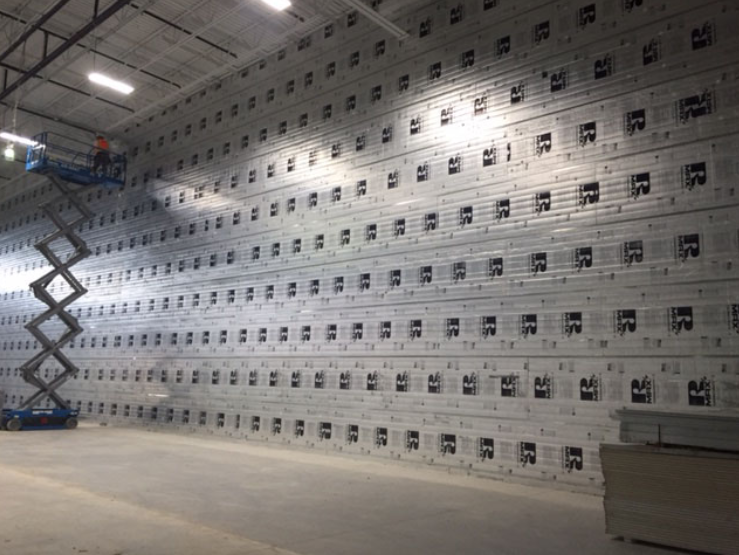
Beyond thermal resistance, this approach affects how enclosures manage moisture, airflow, and fire performance under modern code frameworks.
Moisture Control And Dew-Point Management
Continuous exterior insulation moves the temperature profile outward. This shift reduces condensation potential within framing cavities. Stable temperature profiles protect sheathing and structural components from repeated wetting cycles.
Moisture-management benefits complement energy-efficiency objectives. Hygrothermal stability supports durability provisions embedded in building codes.
Air Leakage Control And Envelope Continuity
Modern codes regulate building air tightness through testing or detailing requirements. Sealed CI systems may support air-barrier continuity when correctly detailed. Reduced infiltration lowers heating and cooling loads. Compliance depends on the complete enclosure design and detailing quality.
Fire Code Coordination And NFPA 285
Certain exterior wall systems require compliance with NFPA 285 fire-propagation testing. Continuous insulation products may be used within tested NFPA 285 wall systems. Approval depends on the validated wall design rather than components evaluated independently.
Continuous Insulation Design Strategies
Design approaches vary depending on framing type, structural configuration, and the selected compliance pathway.
Assembly-Specific Continuous Insulation Strategies
Thermal bridging severity, structural conductivity, and enclosure configuration drive these assembly-specific insulation approaches.
Steel Framing Assemblies
Exterior CI offsets high stud conductivity. Steel framing members create significant thermal bridges because metal transfers heat far more readily than insulation materials. Polyiso continuous insulation is frequently specified in steel-framed wall systems due to its high thermal resistance per inch and compatibility with exterior applications. CI layers are commonly required to maintain effective R-values and satisfy prescriptive or U-factor-based continuous insulation code requirements.
Wood Framing Assemblies
Exterior CI mitigates repetitive framing losses. Although wood framing conducts less heat than steel, studs, plates, and headers still interrupt cavity insulation and reduce whole-wall performance. An uninterrupted exterior layer improves thermal uniformity, stabilizes sheathing temperatures, and helps wall systems meet climate-zone-specific energy code thresholds.
Mass Wall Assemblies
Insulation placement governs thermal lag and condensation behavior. Concrete and masonry walls store and release heat differently than framed systems, making insulation location critical for energy-modeling accuracy. Continuous exterior insulation often improves thermal stability, reduces inward vapor-drive risks, and supports compliance with enclosure-based calculations.
Continuous Insulation-Only Compliance Paths
CI-only designs eliminate cavity insulation and rely on thicker exterior insulation layers. Compliance is verified through U-factor equivalency modeling. These configurations are evaluated based on whole-wall thermal transmittance rather than insulation R-value alone, making accurate framing inputs and material properties essential during analysis.
Designers select CI-only strategies to simplify detailing, reduce penetrations, or enhance moisture-control performance. Outboard insulation-only strategies can improve air-barrier continuity while stabilizing substrate temperatures. These approaches are frequently used when projects must balance thermal performance, constructability, and evolving continuous insulation code requirements.
Continuous Insulation Compliance And Construction Considerations
Code obligations and detailing priorities often shift when work moves from new construction into modification of existing enclosures.
Continuous Insulation In Renovation And Alteration Projects
While these strategies primarily shape new construction, insulation decisions also influence how renovation and alteration projects are evaluated under current energy codes. Existing buildings are not always obligated to meet the latest prescriptive insulation levels. Major enclosure modifications frequently trigger compliance with current codes.
Documentation And Compliance Verification
COMcheck and REScheck tools evaluate envelope sections under continuous insulation code requirements using insulation R-values, framing inputs, and exterior insulation layers. Inconsistencies between drawings and compliance reports frequently generate delays. Alignment across specifications, modeling outputs, and submittals reduces approval friction.
Detailing Implications Of Continuous Insulation Thickness
CI thickness affects attachment systems, cladding supports, and window transitions. Fastener selection and spacing influence thermal bridging behavior. Integration across disciplines preserves modeled assumptions and compliance outcomes.
Rmax Can Help You Pick The Right Insulation
Selecting insulation systems aligned with energy codes requires evaluation of climate zones, enclosure performance, and compliance pathways. Rmax representatives review project-specific thermal targets and exterior insulation strategies. Product systems are selected to meet regulatory and performance objectives. Contact us today to evaluate insulation solutions for your next project.