Welcome to the team!

Tyson Construction Solutions Blog Announcement.jpg

Rmax, Insulation Business Unit (PIR) of Sika Corporation, a leading provider of high performance polyisocyanurate Insulation products for the roofing market, is pleased to announce the appointment of Tyson Construction Solutions Corporation as their exclusive sales agent for Northern California.

Boasting over 18 years of experience in providing specification, design and project assistance for the building envelope community, TCSC president Scott Tyson welcomes the addition of the Rmax portfolio as a compliment to their other solutions which include Sika RoofPro / RoofCoat fluid applied systems.

Rmax provides its northern California customers full-system tapered estimating and layout services and fast order turn around on flat, tapered and composite polyiso insulation via their strategically located regional production facility in Fernley, Nevada.

For assistance on your upcoming project or stocking polyiso insulation needs, contact Scott Tyson and TCSC at (650) 291-9651 or at tysoncs20@gmail.com.

Rmax and Tyson Construction Solutions look forward to having the honor of enhancing the performance of your next project!

A Comparative Study of Water Absorption, Drying and Rewetting...Polyiso vs. Mineral Wool

Check out what M. Steven Doggett, Ph.D., Principal Scientist & CEO of Built Environments, has to say about mineral wool absorbing water compared to foil-faced polyiso.


A little preview of what you’ll learn in this study…

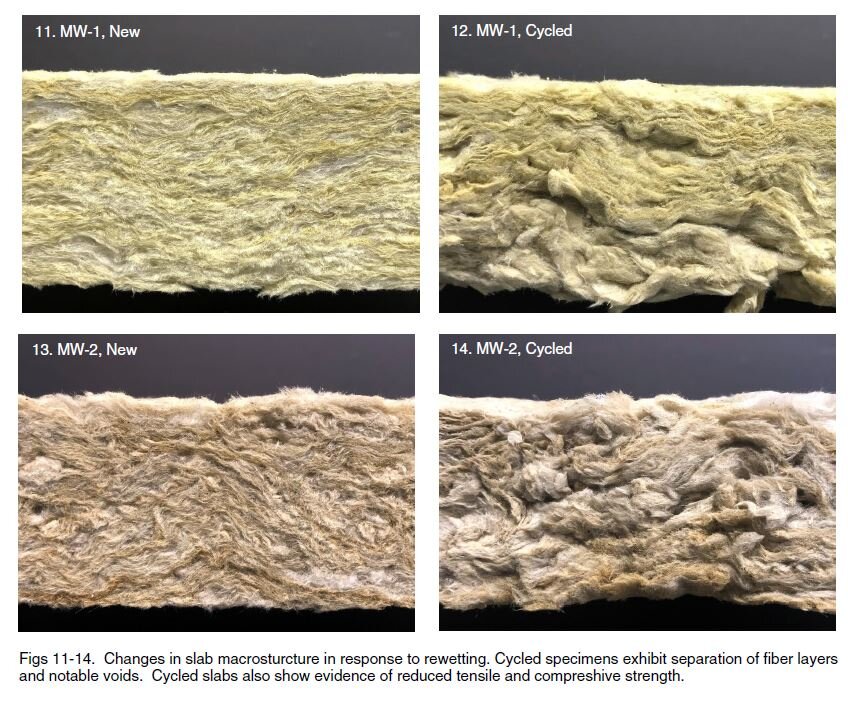
“bulk water flow induced by immersion and draining cause fibers to shift with corresponding changes in void volumes. These fiber shifts are likely due to degraded fiber-resin bonds. During repeated cycles, fiber layers begin to separate as slabs become visibly tattered and weathered (Figs 11-14).”

Mineral Wool Rewetting Rsponse_Image.JPG

SIKA SUPPLY CHAIN AND COVID-19 ANNOUNCEMENT

RE: SIKA HEALTH, SAFETY AND BUSINESS CONTINUITY (COVID-19)

April 24, 2020


Dear Valued Customer: The health and safety of our employees, customers, and of their families are of the upmost importance to Sika. Since the development of COVID-19 in the United States, Sika Corporation has taken several measures for the continued good well-being and that our business remains operational to supply and service our customers in these unprecedented times.

All employees not working in a production or supply related function continue to work from home. Our production and shipping operations are working safely and diligently to keep our customers and critical infrastructure projects supplied with our products nationwide. This has been accomplished through the dedication and resilience of our people.

All Sika facilities, at a minimum, continue to follow the health and safety guidelines of the CDC as well as all state and local government officials. Practicing social distancing, wearing appropriate PPE, enhanced cleaning and sanitizing, on-site temperature monitoring and clear health guidelines for employees are part of Sika’s safety program.

Sika continues to manufacture products that support essential service industries that are part of our Nation’s and State’s critical infrastructure. For example, Sika products are essential to continued critical infrastructure viability in the construction, maintenance and repair of facilities in medical and healthcare, telecommunications, food and agriculture, transportation, logistics, energy, water/wastewater and public works industries. In addition to our dedicated employees manufacturing and supplying these products, Sika’s sales and service team remain fully engaged in supporting you as our valued customer. We also continue to provide webinars, virtual continuing education seminars and specification support in areas where face-to-face interaction is not yet possible.

Please rest assured that Sika is an established company and has been in business for 110 years. While COVID-19 has presented unique challenges, we remain committed to protecting the health and safety of our employees and continuing to earn your trust.

We wish you and your families continued good health

Sincerely,
Richard Montani
President and Chief Executive Officer

David White
SVP, Quality & Risk Management

SIKA SUPPLY CHAIN AND COVID-19 ANNOUNCEMENT
Energy Savings Go Through the Roof!

Posted By PIMA

When it’s time to replace a roof, most owners choose roofing materials based on performance qualities like longevity and weather resistance. But a well-designed roof can also shine in another performance area: energy efficiency.

Energy efficiency is important to many owners with concerns ranging from climate impacts like building carbon footprints to the costs and reliability of energy resources. Since approximately 25 percent of heat loss in an uninsulated building occurs through the roof, choosing materials that add insulative power can add significant energy savings. For commercial and low-slope roof applications, adding layers of rigid foam insulation to the roofing system can deliver exceptional R-value without a lot of bulk.

An article last month from the Energy News Network details initiatives in Warren, Minnesota and Arnsberg, Germany to use thermal imaging in evaluating building heat loss to help owners determine the best energy efficiency opportunities.

The program was conceived after municipal leaders from Warren and Arnsberg met through the Climate-Smart Municipalities program sponsored by the University of Minnesota’s Institute on the Environment which paired five cities in Minnesota with similar cities in Germany. Arnsberg had been using remote-piloted aircraft to collect thermal images of building heat loss. Leaders in Warren decided to try using drones to get more detailed information.

Piggybacking off each other’s ideas, the two cities are innovating the practical applications of these thermal images in directing energy efficiency efforts to the places that will have the greatest impact. Their research provides further evidence that reroofing with energy-efficient materials can decrease building heat loss and lead to reduced energy consumption.

Tags:  building envelope  buildings  continuous insulation  Efficiency  energy efficiency  insulation  Polyiso 

Canada to Address Building Code Gap for Existing Buildings

Posted By PIMA

The Canadian Commission on Building and Fire Codes has issued recommendations to address “the absence of clear code requirements for existing buildings.” The report outlines an approach to constructing a regulatory framework for today’s building stock to address five objectives, including improved energy efficiency. Canada has invited interested stakeholders to provide input on the report through a brief online survey by August 30, 2019. PIMA plans to submit comments that highlight the United States’ experience with the existing building provisions of the IECC and respond to the report’s concerns of building fire safety. To view the online survey, click here.

Energy Conservation Lives!

Posted By PIMA

A recent Trump Administration document “encourages communities to adopt and enforce up-to-date building codes.” This important policy recommendation, contained in the Federal Emergency Management Administration (FEMA)’s National Mitigation Investment Strategy (NMIS), is expected to further catalyze code adoption and pave the way toward enforcement of these critical building standards.

The NMIS Recommendation 3.1 further states:
“Building codes regulate the design, construction, and occupancy of buildings and structures by providing minimum requirements to safeguard public safety, health and general welfare. Architects, engineers, builders, and regulators should use the latest building codes for the most up-to-date requirements for structural integrity, mechanical integrity, fire prevention and energy conservation. Using up-to-date building codes helps communities survive, remain resilient, and continue to provide essential services after a disaster occurs.”

This recommendation, combined with increased code adoption at the local level will be a powerful market signal. Further information and an explanation of the document is available here.

Durham’s Liberty Warehouse – Iconic and Insulated

Liberty Warehouse Exterior Image.jpg

Liberty Warehouse will be Durham, North Carolina’s next iconic building and an anchor of the Central Park neighborhood. The project will use the Rmax ECOMAXci Wall Solution to provide Polyiso Continuous Insulation (CI) in the walls along with specialty windows to enhance this unique re-development effort.  

Originally built in the 1940’s as one of the last of the large tobacco auction warehouses, this space will now include 246 luxury rental apartments and 24,693 square-feet of retail space. The ECOMAXci Wall Solution is an NFPA 285 approved assembly, providing continuous insulation to eliminate thermal bridging through the steel studs, and an integrated air, water and vapor barrier to improve performance, lower costs, and reduce environmental impact.

Insulation Fly-In: Building Relationships for Better Buildings

Posted By PIMA

In this age of instant connectivity, virtual encounters allow communication and cooperation with unprecedented speed and ease. But there’s something about a face-to-face meeting that really helps people reach common ground. In May, 110 contractors, manufacturers, and suppliers from the insulation industry representing the majority of states met on Capitol Hill with lawmakers to discuss issues and ideas for harnessing the resources of the insulation industry to tackle some of our country’s most pressing problems. And they were serious about building those face-to-face relationships—and packed in 101 meetings on Capitol Hill, 23 of them with members of Congress. 

With the constant stream of news stories highlighting the human costs and economic consequences of a changing environment, momentum is growing behind solutions that can address these environmental challenges in ways that strengthen U.S. economic productivity and competitiveness. To that end, PIMA members are working to build enthusiasm for federal action on policies that optimize the energy efficiency of new and existing buildings. Raising standards for new residential, commercial, and industrial buildings and retrofitting older ones can lead to long-term savings through better building performance.

Increasing the energy efficiency of our buildings is a practical way to help the environment, create jobs, and save money. Boosting energy efficiency alone can provide 40% of the necessary greenhouse gas emissions reductions to meet global targets and the work to implement these standards will lead to jobs in manufacturing, distribution, and installation. These improvements will save consumers billions of dollars in energy costs annually – money that can be invested back into the U.S. economy.

But these policies would do more than save energy; they’d also provide buildings and the people who use them with added protection from severe weather events. In 2017 alone, there were $317 billion in losses from US natural disasters, jump-starting discussions on creating more resilient buildings and communities. Optimizing insulation for an energy efficient building envelope improves performance post-disaster or during prolonged events like heat waves or extreme cold. And the investment would pay off – it’s estimated that designing buildings to the 2018 I-Codes would deliver a national benefit of $11 for every $1 invested.  

Some legislative tools to promote these improvements include:

  • Strengthening oversight of new rules for disaster preparedness and response.

  • Supporting investments in building science research.

  • Recognizing buildings as infrastructure, including critical structures such as hospitals and schools.

Improving the energy efficiency and resilience of our built environment is a proactive approach to reduce greenhouse gas emissions while boosting economic growth, improving energy security, and advancing U.S. global competitiveness. PIMA members are working together to promote policies that support these goals through events like Insulation Industry National Policy Conference. 

For a deeper dive into the policy topics that were highlighted during the industry fly-in, please download the policy briefs: